Understanding the Cyber Incident Reporting for Critical Infrastructure Act (CIRCIA)
What It Means, Who Must Comply, and How DarkOwl Can Help
April 28, 2026
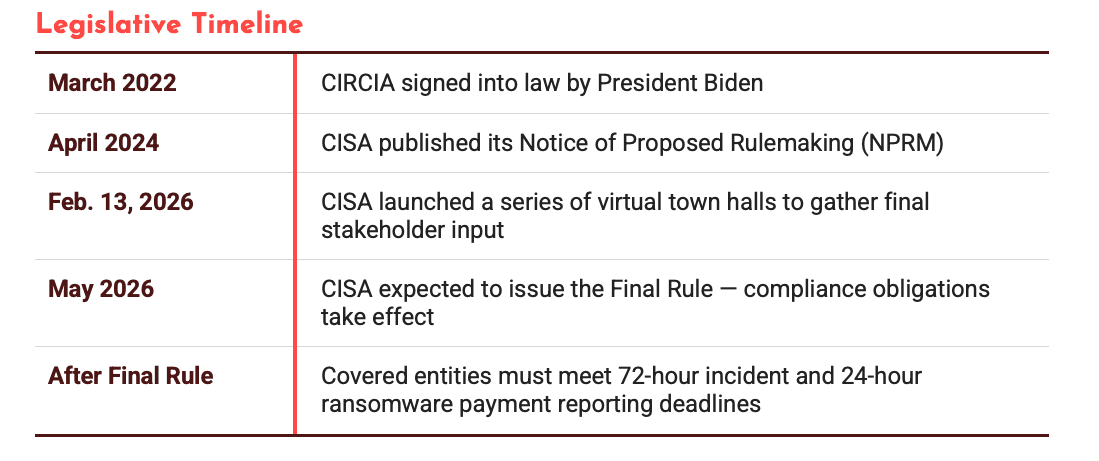
The Cyber Incident Reporting for Critical Infrastructure Act (CIRCIA) represents one of the most significant shifts in U.S. cybersecurity regulation in over a decade. Signed into law in March 2022, CIRCIA establishes mandatory cyber incident reporting requirements for organizations operating across all 16 critical infrastructure sectors. With CISA’s final rule expected in May 2026, the window for preparation is rapidly closing.
This blog explains what CIRCIA requires, which organizations are subject to compliance, and how DarkOwl’s dark web intelligence platform positions covered entities to meet their obligations proactively—before an incident ever occurs.

WHAT IS CIRCIA?
CIRCIA—the Cyber Incident Reporting for Critical Infrastructure Act of 2022—grants the Cybersecurity and Infrastructure Security Agency (CISA) authority to mandate reporting of cyber incidents and ransomware payments from owners and operators of critical infrastructure. The law tasks CISA with developing and enforcing a rulemaking process that creates standardized, time-sensitive reporting obligations across the private and public sectors.
Reporting Requirements
Substantial Cyber Incidents: Covered entities must report significant cyber incidents to CISA within 72 hours of reasonably believing an incident has occurred.
Ransomware Payments: Any ransomware payment made by a covered entity must be reported to CISA within 24 hours of the payment being made.
These requirements are not merely informational. Organizations must demonstrate that they have the infrastructure and processes in place to detect incidents, assess their significance, and report within these tight windows. Failure to report carries legal consequences, including subpoena authority granted to CISA.
WHO MUST COMPLY?
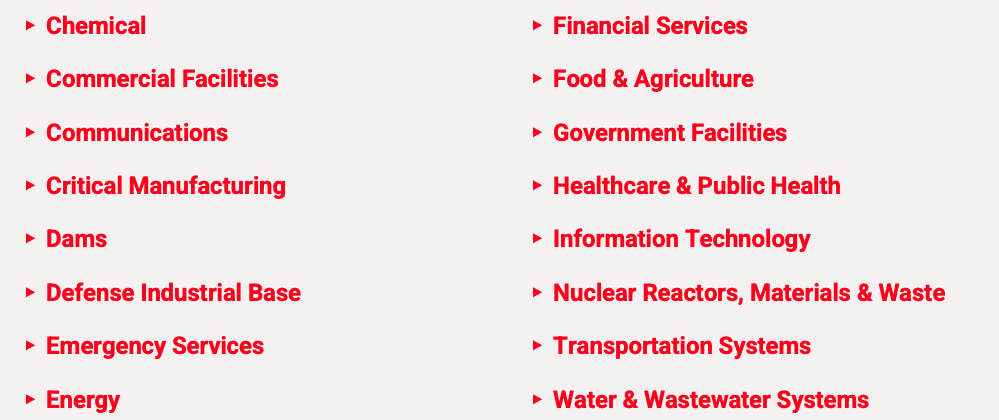
CISA estimates that approximately 300,000 entities will be subject to CIRCIA’s reporting requirements once the final rule takes effect. Coverage spans all 16 critical infrastructure sectors designated by the Department of Homeland Security:
Defining ‘Covered Entities’
The final rule will define specific thresholds and criteria for which organizations within each sector qualify as “covered entities.” Based on the NPRM and public comments, covered entities are expected to include:
- Private sector organizations operating systems or networks integral to critical infrastructure functions
- Government contractors and subcontractors supporting critical infrastructure programs
- Small and mid-sized businesses meeting sector-specific ownership or operational thresholds
- Entities that own or operate industrial control systems (ICS) or operational technology (OT) environments
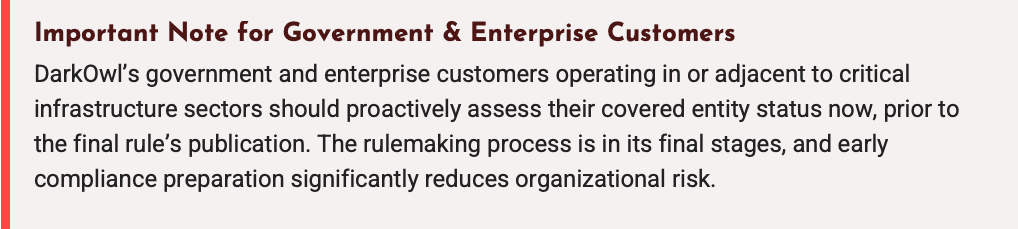
Importantly, covered entity status is not limited to large enterprises. The breadth of the estimated 300,000-entity scope reflects CISA’s intent to create comprehensive visibility across the critical infrastructure ecosystem, from utilities and hospitals to transportation networks and financial institutions.
HOW DARKOWL HELPS ORGANIZATIONS COMPLY
CIRCIA’s reporting obligations create a fundamental challenge: organizations cannot report what they cannot detect. The 72-hour window for substantial cyber incidents and the 24-hour window for ransomware payments demand that covered entities have continuous, proactive threat detection capabilities—not reactive, post-breach discovery processes.
DarkOwl provides dark web intelligence and credential exposure monitoring that directly addresses this challenge. Our platform enables organizations to identify indicators of compromise, data exposure, and threat actor activity before they escalate into reportable incidents—or to detect them the moment they do.
Dark Web Monitoring for Early Incident Detection
Threat actors frequently surface intent, tooling, and stolen data on dark web forums, marketplaces, and encrypted channels days or weeks before a formal attack is launched or discovered by the target organization. DarkOwl’s continuous monitoring of these environments provides covered entities with:
- Early warning of data exfiltration, including stolen credentials, proprietary documents, and sensitive internal communications appearing on dark web markets
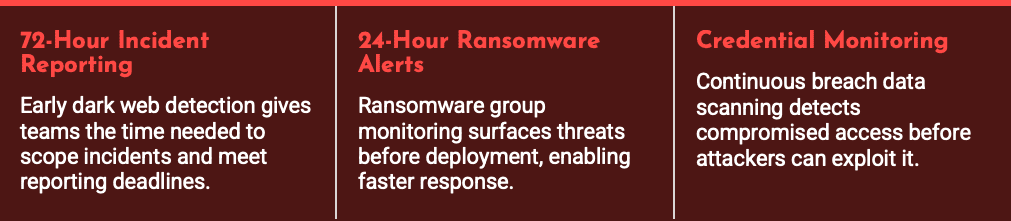
- Detection of ransomware group communications referencing an organization or its vendors, often preceding deployment of ransomware payloads
- Identification of threat actor reconnaissance and targeting activity associated with specific sectors or infrastructure types
- Alerting on newly compromised credentials that may indicate an active breach or imminent attack
This intelligence directly supports the 72-hour reporting window by giving security teams a head start—enabling them to investigate, scope, and assess the significance of potential incidents before the clock starts.
Credential Exposure Services
Credential theft is among the most common precursors to significant cyber incidents. Compromised usernames and passwords—particularly those tied to privileged accounts, VPNs, or cloud infrastructure—frequently appear on dark web forums and criminal marketplaces following data breaches at third-party services.
DarkOwl’s credential exposure monitoring enables covered entities to:
- Continuously scan for employee and customer credentials appearing in dark web breach compilations and stealer logs
- Receive actionable alerts when new credential exposures are detected, enabling rapid password resets and account lockdowns
- Attribute credential exposure to specific breach events, supporting incident scoping and regulatory notification decisions
- Maintain an ongoing audit trail of exposure detection and response actions—critical documentation for demonstrating compliance due diligence
Demonstrating Proactive Threat Detection Capability
CIRCIA does not simply require organizations to report incidents—it implicitly requires that they have the detection infrastructure capable of identifying those incidents within compressed timeframes. Regulators and legal counsel will increasingly ask whether covered entities exercised reasonable diligence in monitoring for threats.
By deploying DarkOwl’s platform, organizations create a documented, auditable record of proactive threat intelligence activity. This serves multiple compliance functions:
- Evidence of reasonable cybersecurity diligence in the event of a regulatory inquiry or breach litigation
- Structured detection workflows that align with incident response plans and reporting procedures
- Intelligence feeds that can integrate with SIEM, SOAR, and incident response platforms to accelerate detection-to-reporting timelines
- Sector-specific threat intelligence relevant to each of the 16 critical infrastructure categories
Vendor and Supply Chain Risk Intelligence
CIRCIA’s scope extends to organizations that are integral to critical infrastructure operations—including technology vendors, managed service providers, and supply chain partners. A breach at a third-party vendor can create a reportable incident obligation for a covered entity, even if the covered entity’s own systems were not directly compromised.
DarkOwl supports supply chain risk management by monitoring for dark web activity associated with key vendors and third-party partners, providing covered entities with a broader view of their threat exposure across the entire organizational ecosystem.
CONCLUSION
CIRCIA represents a fundamental shift in how the U.S. government expects critical infrastructure operators to approach cybersecurity. Mandatory reporting obligations, compressed timelines, and broad sectoral coverage create both regulatory urgency and strategic imperative: covered entities must build proactive threat detection capabilities or face significant compliance risk.
DarkOwl’s dark web intelligence and credential exposure monitoring platform is designed precisely for this environment. By surfacing threats early—often before they escalate into reportable incidents—DarkOwl enables covered entities to meet their CIRCIA obligations, demonstrate proactive due diligence, and strengthen their overall security posture.
How can DarkOwl help your company prepare for CIRCIA compliance? Contact Us.


