The State of Darknet Marketplaces in 2025: Trends, Metrics, and Insights
December 18, 2025
The darknet is a hidden part of the internet that operates beyond the reach of traditional search engines and mainstream platforms. Within this space, darknet marketplaces have emerged as virtual bazaars where anonymous buyers and sellers trade goods and services, often illicit, using privacy-focused technologies like Tor and cryptocurrencies such as Monero and Bitcoin. These markets are structured much like legitimate e-commerce sites, featuring product listings, vendor ratings, customer reviews, and even dispute resolution systems.
DarkOwl collects data from a wide range of marketplaces, capturing the breadth of listings, vendor activity, and community interactions. In this blog, we explore the state of darknet markets in 2025, highlighting which platforms lead in listings and vendor count, how products are distributed across categories, the flow of shipments around the world, and patterns of user engagement through reviews.
By examining these factors, we aim to provide a window into the scale, structure, and dynamics of this hidden economy, revealing both the major players and the underlying trends shaping the market landscape.
Top Darknet Marketplaces in 2025
In 2025, we collected unique listings from the leading darknet marketplaces, summarized in Figure 1(a). Vendor activity is shown separately in Figure 1(b).
Based on listing volume, the most active markets in our dataset were Black-Pyramid, Ares, Dark-Matter, Zelenka-Lolzteam, Nexus-Market, and Drughub. These platforms consistently generated high volumes of product posts across a wide range of categories, from narcotics and fraud services to digital goods and hacking tools. However, when ranking markets by the number of distinct vendors rather than total listings, a slightly different picture emerges. Zelenka-Lolzteam, Archetyp, Drughub, Dark-Matter, Blackopps, and Black-Pyramid attracted the largest number of sellers overall, illustrating how some markets excel at breadth of vendors even if they generate fewer listings per seller.
Market stability in 2025 remained a challenge, as several high-profile platforms experienced abrupt shutdowns. MGM-Grand, Archetyp, Abacus, and Elysium-Market all disappeared mid-year, either due to law enforcement intervention or suspected exit scams. Their closures caused sudden shifts in vendor migration patterns and contributed to the overall volatility of the ecosystem. These dynamics highlight the importance of tracking not just market size but also operational longevity, resilience, and community trust.
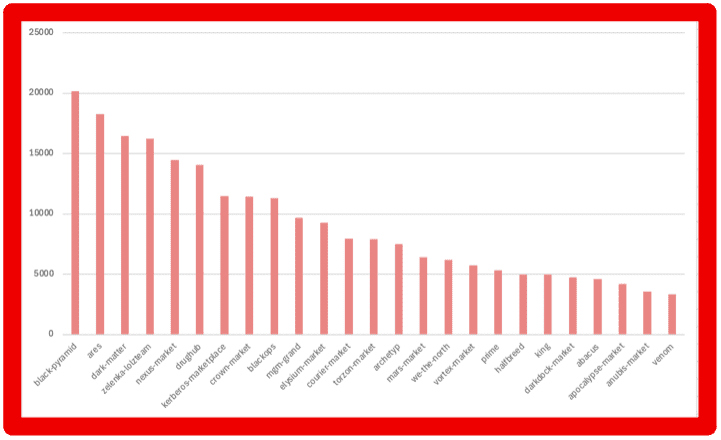
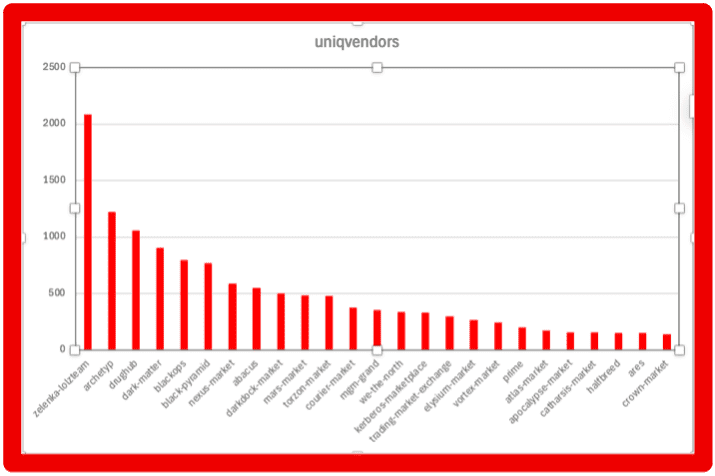
Figure 1: Top Markets by (a) Unique product listings and (b) unique vendors
Market reviews
Reviews play a crucial role in darknet marketplaces because they are one of the few publicly visible indicators of community engagement, trust, and transaction legitimacy. In environments where users operate anonymously and traditional reputation systems are absent, reviews help buyers gauge vendor reliability, product quality, and the likelihood of receiving what they paid for. They also offer insight into vendor longevity and buyer satisfaction—information that listing counts alone cannot provide.
On these markets, review activity becomes a broader marker of community health. Reviews show that buyers are active, transactions are taking place, and vendors are accumulating reputational signals that others can verify. When users take the time to leave feedback, it fosters a shared sense of accountability within an otherwise anonymous ecosystem. Markets with consistent review activity tend to feel more dynamic and trustworthy: buyers rely on collective experience to avoid scams, vendors depend on feedback to differentiate themselves, and the community becomes more informed and resilient. In this way, engagement acts as a stabilizing force, shaping user behavior and contributing to the long-term viability of a market. Measuring review activity, therefore, offers more than a participation metric—it provides a window into the social dynamics that influence market stability, consumer decision-making, and the overall trust architecture of the darknet ecosystem. Although it must also be considered that the reviews may be created by the vendors to make it appear as if they are active and deliver good services.
To quantify these dynamics, we examined review activity across markets. Overall, 68% of the markets we collected included some form of user review or feedback mechanism. Among those markets, 23% of listings had at least one review; across all markets (including those without review systems), 16% of listings received reviews. On markets that supported reviews, listings averaged 7 reviews per post, rising to 16 reviews when considering only listings that had reviews. Notably, ten of the fourteen top markets discussed above offered review functionality. Figure 2 shows the percentage of listings with reviews across these top markets, illustrating the varying levels of community engagement.
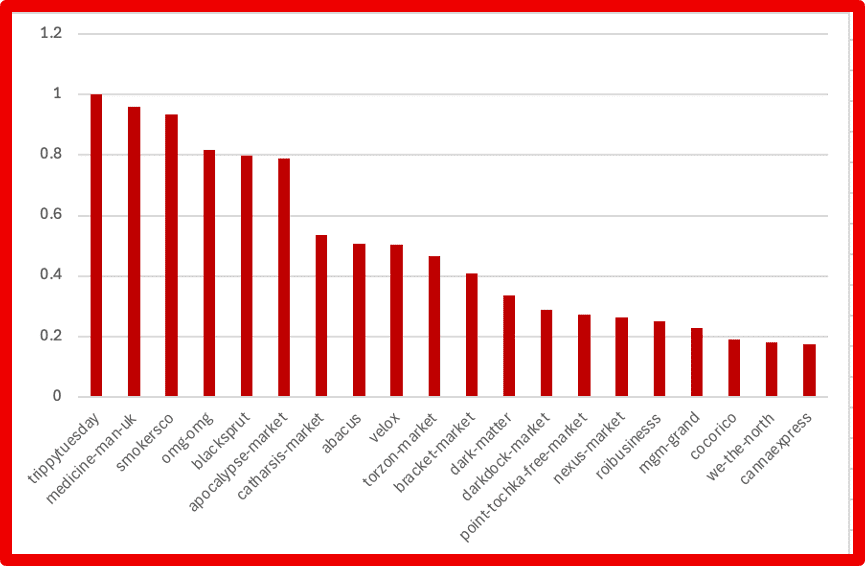
Figure 2: Markets with the highest customer engagement based on percentage of listings with reviews
Category Breakdown
In addition to examining overall activity and community engagement, we conducted a category-level analysis across the full DarkMart dataset, not just the top markets. Whenever markets provided category labels, we extracted and normalized them into 11 high-level categories to create a consistent taxonomy across platforms. For listings without explicit category metadata, we applied a clustering-based classification approach to assign them to the most likely category based on listing text and semantic similarity. This allowed us to produce a unified view of the thematic composition of the ecosystem.
Figure 3 presents the distribution of these categories across all markets in our dataset. The landscape is dominated by Drugs and Chemicals, which account for 68% of all listings. This aligns with longstanding trends in darknet commerce, where narcotics represent the bulk of transactional activity. The next largest categories are Fraud (13%) and Counterfeit Items (7%). The Fraud category encompasses offerings such as stolen payment-card data, phishing kits, account takeovers, and forged or altered identification documents. Counterfeit items include fake currency, imitation branded goods (e.g., luxury watches, designer bags), and various forged certificates or documentation.
Because drugs and chemicals dominate the darknet marketplace landscape, we took a closer look at the different types of products within this category. The right side of Figure 3 shows the distribution of subcategories, offering insight into the variety of goods vendors specialize in.
Cannabis leads the subcategories, accounting for 41% of listings, and includes traditional cannabis as well as THC-infused products. Following cannabis are opioids (14%), including powerful painkillers like Fentanyl and Heroin, which act on the body’s opioid receptors. Psychedelics (11%), including LSD, psilocybin mushrooms, and Ketamine, also make up a significant portion, designed to alter perception, mood, and cognition.
Stimulants (12%), including Methamphetamine, Cocaine, and other “speed” drugs, increase alertness and energy, while depressants (3%), such as Xanax and GHB, slow brain activity and are often prescribed for anxiety or sleep disorders. Party drugs (7%), such as MDMA and Ecstasy, are designed to enhance sociability and create feelings of empathy, often used in recreational settings. Finally, miscellaneous drugs (3%) cover a variety of specialized items, from hormonal treatments and sexual enhancement products to vaping-related substances.
Taken together, this subcategory breakdown illustrates not just the sheer volume of drug-related listings, but also the diversity of products and specialization among vendors. It shows how darknet marketplaces cater to a wide range of consumer needs, from medical and recreational to niche and experimental.
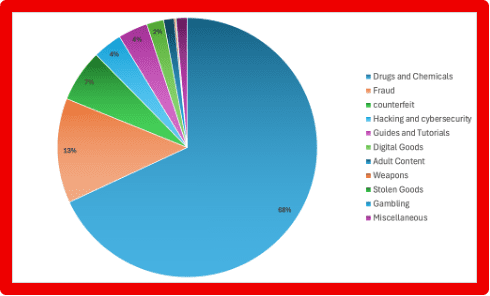
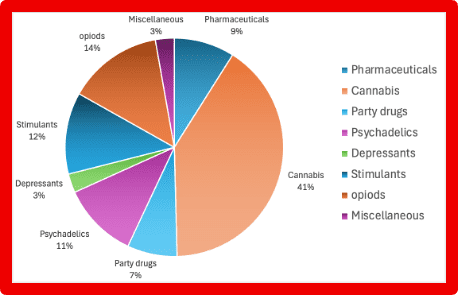
Figure 3: DarkMart category and subcategory breakdown (Drugs and Chemicals)
Shipping Breakdown
We also examined the shipping data available for our 2025 product listings. Figure 4 illustrates the flow of shipments from source countries to destination countries. For clarity, we excluded listings where the source or destination was listed as “worldwide” and aggregated countries into broader continents or regions.
Unsurprisingly, the bulk of shipments occur within North America. Europe follows a similar pattern, with many shipments staying within the continent, but European vendors also reach a wide range of international destinations. North America, too, sends products across the globe, including to regions like Africa—even though Africa itself contributes very few listings as a point of origin.
Some patterns are particularly striking. A small subset of products reportedly ships from and to Antarctica, highlighting the unusual and niche nature of certain listings. Asia exhibits a more modest version of Europe’s international reach, with most shipments staying regional but a smaller proportion traveling worldwide.
Overall, the shipping data reveals that while most transactions remain regional, darknet markets are capable of supporting truly global commerce. The map also underscores the asymmetry of trade: some regions are primarily exporters, others primarily importers, and a few see very limited activity despite being part of the network. These flows offer a window into how products, and by extension, vendors, connect distant parts of the world in a complex, global ecosystem.
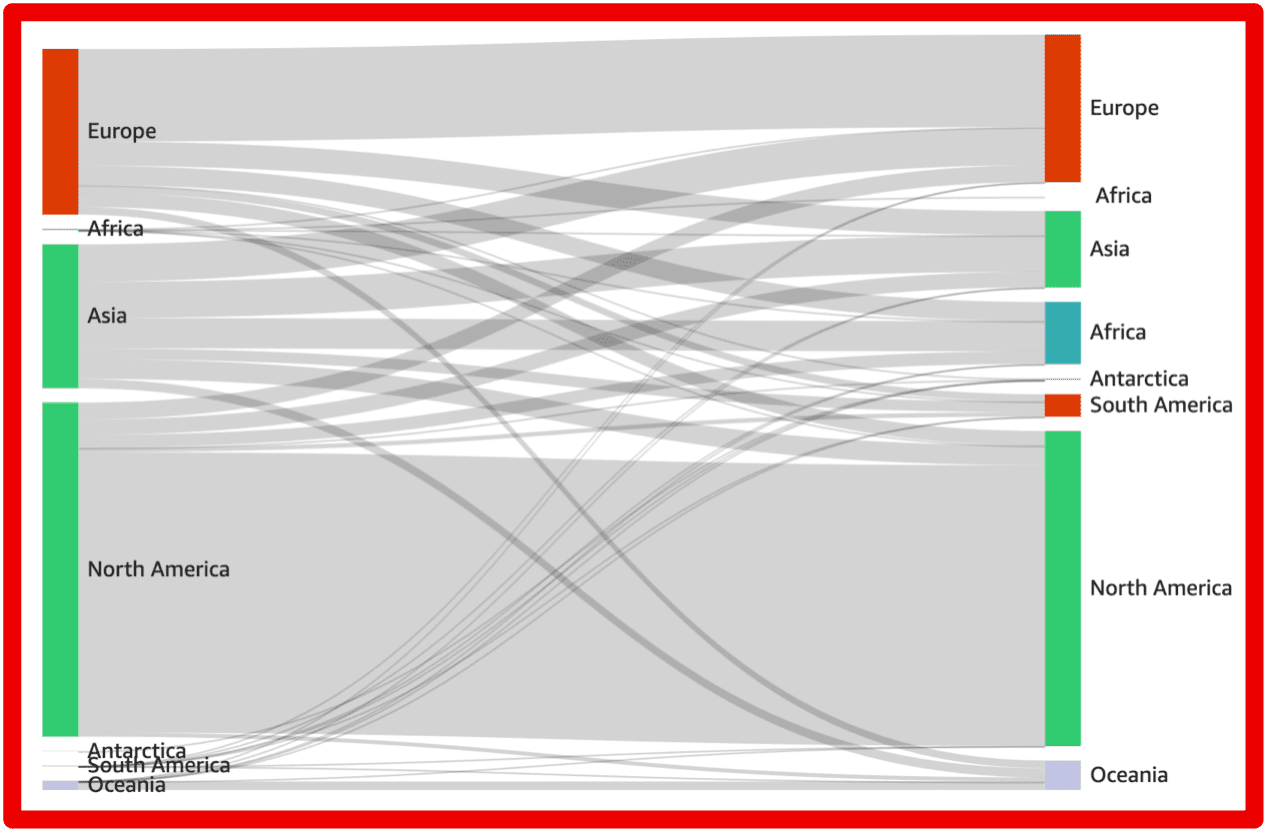
Figure 4: Shipping flows within DarkMart
Conclusions
Our 2025 analysis of darknet marketplaces paints a picture of a highly active and evolving ecosystem. Some markets dominate in listings, while others attract the largest communities of vendors. Drug-related listings continue to account for most of the activity, with fraud and counterfeit items forming significant secondary categories. Shipping data highlights both regional concentration and surprising international reach, while review metrics reveal the importance of community engagement in fostering trust and reliability in an otherwise anonymous environment.
Taken together, these insights offer a comprehensive snapshot of the darknet economy, one that shows both the scale of activity and the social dynamics that sustain it. As markets rise, fall, and adapt, ongoing monitoring is essential to understand the forces shaping this hidden corner of global commerce.
Don’t miss any of our research! Follow us on LinkedIn.


