Author: kathy hoffman

[Webinar Transcription] DarkOwl and Carahsoft – Darknet Investigations for Government

Recorded April 23, 2026

During this webinar, Jennifer Ewbank, DarkOwl Board Director and Former Deputy Director of CIA for Digital Innovation, and DarkOwl’s Chief Business Officer, Alison Halland, explore darknet data’s threat-intelligence capabilities across government and enterprise environments.

In this interview-based session, attendees gained:

  • A forward-looking view of how regulatory frameworks and intelligence practices will reshape cyber-defense requirements over the next decade.
  • First-hand perspective on how darknet intelligence informs national-level investigations.
  • Deep insight into criminal ecosystem behaviors and the evolving tactics threat actors rely on within anonymous networks.

NOTE: Some content has been edited for length and clarity.


Jennifer – I’ve really been looking forward to this conversation with Alison and great to have all of you who’ve dialed in and welcome to those who watch later in recorded version. To kick us off, I just wanted to observe that I think most people think of the dark web as a place where criminals and conspiracy theorists gather – and I suppose that’s true. But the real story is maybe a bit more interesting and the reason we’re here today is that there’s a bit more utility in it all as well.

So today, we want to pull back the curtain a bit on what’s actually there in the darknet, how serious investigators are using information that is collected there, and why increasingly it matters to all sorts of organizations that may really think that this dark corner of the internet has nothing to do with them.  It probably does.  So Alison Halland is Chief Business Officer of DarkOwl.

DarkOwl is a fantastic company that maintains the world’s largest commercially available index of darknet content. They turn it into insights and intelligence for governments and enterprises and others who track these things.  So, this hour together is a conversation. It’s not a lecture. Please do pop your questions into the chat. We want to know what’s of interest to you, what catches your attention. 

So with that preamble, we’re going to turn to a question to kick it off.  And really, maybe we should start at the beginning because not everyone spends a lot of time studying the dark web.  So, let’s start with the basics, Alison. When we say darknet or dark web, what are we actually talking about? And how does DarkOwl collect from that hidden corner of the online world? 

Alison – Yeah, thank you, Jennifer. And a big thank you to Jennifer, who has been so helpful as a board member to DarkOwl and helped us steer both our collection and our product in a way that’s going to help folks conduct these investigations. So, this slide in the background summarizes where DarkOwl collects data from.
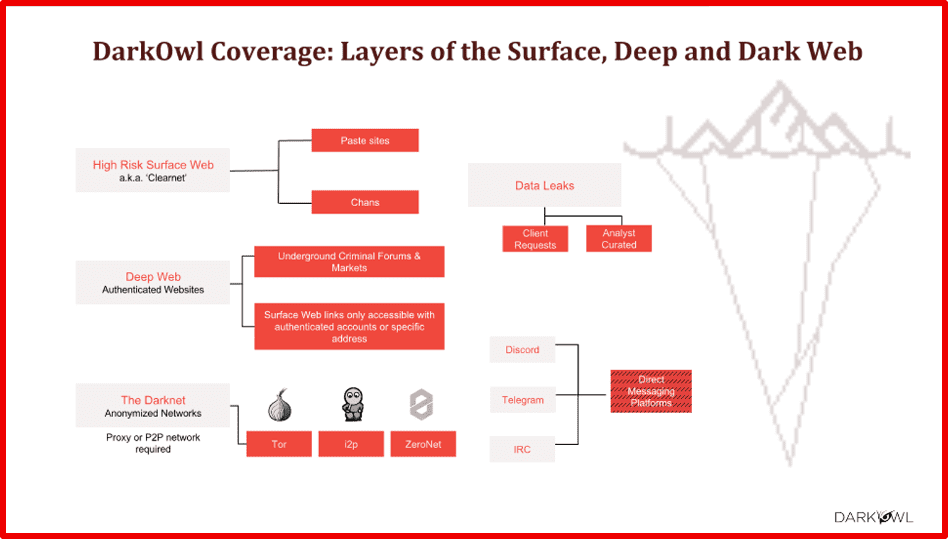
So, Jennifer’s direct question was, what is the darknet? And interestingly, we’re in a space where I’m not entirely sure there’s consensus on that. I would say most people would agree that Tor is kind of the tried-and-true darknet source. However, DarkOwl’s take is if there are conversations or criminal activity or, you know, interesting back and forth going on, that is an area that we want to collect from.

So, our definition of dark web and dark web adjacent is sometimes broader than some others in the space. I would directly point to this lower right-hand corner, our direct messaging platform collection.  There is no doubt that Telegram is our most requested data source today. Just given that community, what they the talking about, the transient nature of it.

We also get a lot of requests for our marketplace and forum data. That I would definitely highlight as well as an area that, historically, we have a strong collect here – part of that is a reflection of our history and some of the personas that we’ve honed over the years. This is quite frankly a difficult, meaning time consuming, expensive place to collect from. It takes a manual work at the onset. Sometimes other providers will defer away from this area, whereas DarkOwl has traditionally hung our hat on really making sure that we have collected from those forums and marketplaces to make sure that we can illuminate that space for the folks coming in and doing investigations. 

Jennifer – Great. Well, thank you so much.

Back where I started, I think most people I talked to about the dark web assume that it’s largely going to be drug dealers and ransomware gangs who operate there. And they do, don’t get me wrong. But is that still really the reality or has this changed in recent years? And what does it look like today? 

Alison – It is absolutely an ever-changing ecosystem. The groups and categories you just described flourish in the space, but so do a lot of others. One great example is when people think of dark web marketplaces, they immediately go to narcotics – and narcotics is the most reflected marketplace listing by category in our dataset. However, at least at my time at DarkOwl, the range in what people are selling has grown exponentially. So, you can buy anything from someone’s AWS keys to, I mean, it’s just exploded in terms of what’s being listed there. So, Jennifer, I do think you’re correct that people tend to have a pretty narrow view, but there are so many uses for this data, both on the government and commercial side in terms of understanding how the criminals are acting in this environment. I’m sure there’s folks on this call that have a ton of experience in this space. 

And as everyone knows, 2025 was a pretty big year of upheaval for the dark web and, you know, this ecosystem in regards to just so many changes. I mean, when the XSS forum got taken down by Europol, I mean, people don’t just give up – they then move to a different platform, a different forum. There are so many conversations happening in the background at DarkOwl around where are we collecting from next? Are we try to move to the next platform or the next Telegram channel and understanding what those flows and data movements look like is extremely important, as you know, from your previous work, Jennifer.

Jennifer – That’s so true. I just think that the diversity of activity that’s represented on the dark web these days is really noteworthy. I imagine there are those who maybe aren’t as familiar who’d be surprised by some of the entities that are that are operating there, and what they try to do. It’s everything as we’ve said from the criminals to, you know, hacktivists, to you name it, all sorts of bad guys.

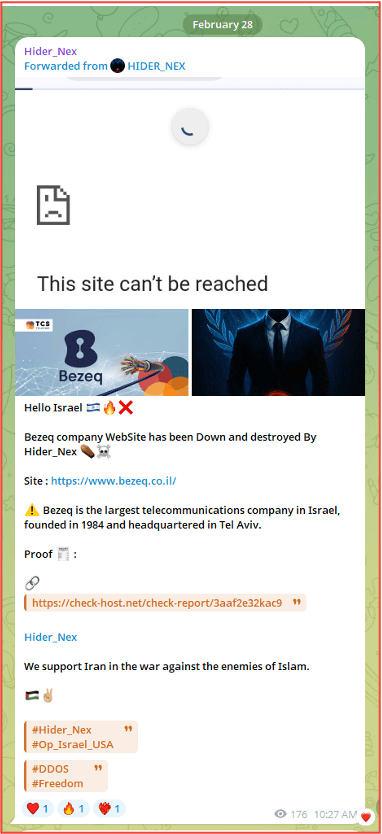
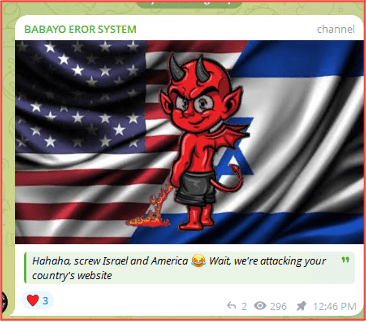
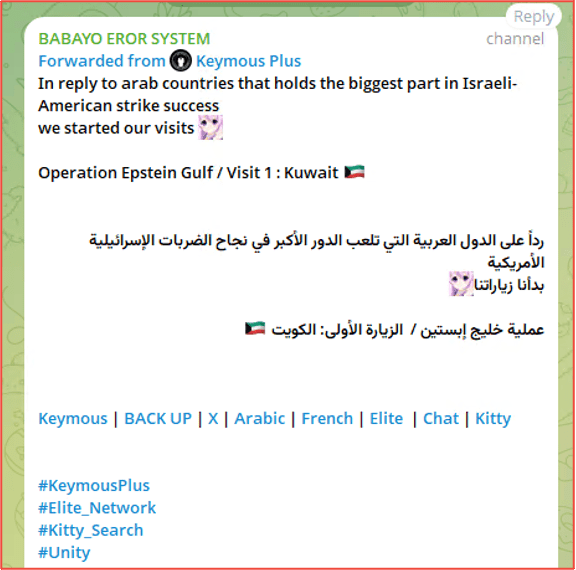
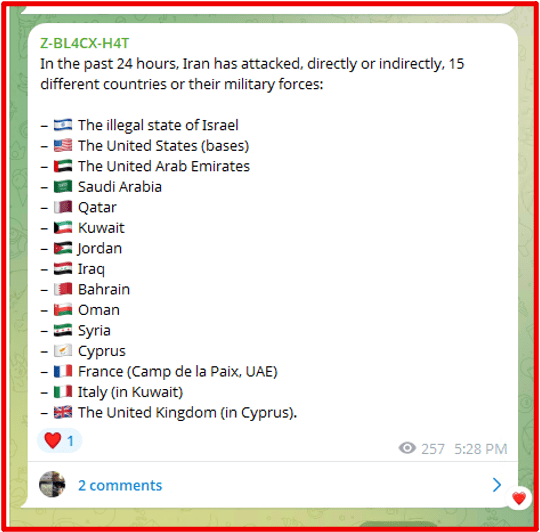
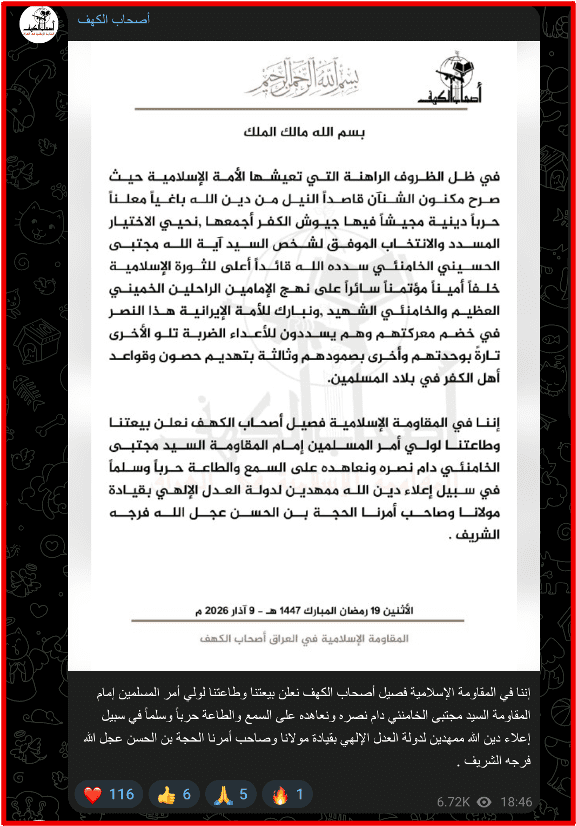
Alison – And it’s reflective of like real world events too. When the conflict broke out in Iran, within three or four days DarkOwl added about 140 Telegram channels to our collection. These were either channels that had just sprung up or had kind of recategorized their their purpose and they were reflective of both sides of the war and obviously those are conversations that are pretty pertinent to a lot of use cases. 

Jennifer – And you mentioned, you didn’t use this word but how sites come and go, right and this almost is ephemeral nature where they’re moving targets is is that the reality these days to you know authorities kind of glom on to some sort of criminal activity and then they what rebrand move. How do you track that? 

Alison – And part of that is we try and be a member of that community so that we understand where things are going, but that is that is absolutely the reality – everything is shifting and changing. Some of these marketplaces will gain a huge following, a huge transaction volume and then overnight they’ll be an exit scam and and those you know that entire marketplaces is gone and those sellers are trying to relocate and a lot of that conversation on where to go, what to do, happens in some of the areas that we’re collecting from. So, we try and be a part of that and follow right along.

Jennifer – I think that’s where your tradecraft and your history really come into play, where you’re able to maintain that collection over time and the insights derived from it. One little kind of asterisk I’ll put on the conversation about what’s out there is just to highlight for folks how the marketplace on the dark web for deep fakes and synthetic personas has just exploded in the last couple of years along with technology developments that make it much more achievable, easily so and less expensive to create fake personas, face images, faces, voices, you name it, entire video packages that you can purchase in an online marketplace just as if it were a regular online store with customer reviews and money back guarantees and all of that kind of stuff. I say that kind of funny way but the reality is pretty grim – how easily one can acquire really sophisticated tools that can defraud a financial entity that can defraud people and then there’s a whole scope of just really personal tragedy out there with non-consensual intimate imagery which is for sale on the dark web. So, lots of things happening there, very little of it good. 

Alison – And like the speed of creation with AI on the table is so much faster and you know I think a lot of times folks kind of giggle at the fact that some of the same, all the same marketplace dynamics, are in place like especially in a criminal environment where the only thing you can hang your hat on is you know your reviews or your reputation. So, everything matters in the same way it does if you were transacting legal goods: reviews, reputation, all of that’s really important, so we see a lot of that in terms of how vendors are trying to promote their listings. 

Jennifer – Crazy. So, when I was still in government, of course we looked across all these various open source areas as a place where we’re just trying to find some kind of signal in all of that volume of noise, right. We used to talk about a tsunami of data out there and really just trying to figure out what is happening how can you derive insights that are helpful. In the commercial world, of course I see that now every day with companies I’m working with. The thing about the darknet data that I found interesting and that I still find really interesting is just how much, and you’ve touched on this, how much behavioral insight is there, like how do organizations form, how do they operate, how do their businesses operate, and all of that goes far beyond just “hey I’m selling this illegal product.” So, the collection posture I think is really important here and DarkOwl has done a really fantastic job of maintaining those insights. 

Let’s go just a bit deeper and think about how darknet intelligence works in practice right. So, you’ve defined what it is given us some examples of the kinds of information that’s out there, the kinds of actors who operate there. I want to think about how the data actually get used – how does darknet intelligence contribute to open-source intelligence investigations and, maybe for me and for all of those who’ve signed in, can you walk us through what an analyst is doing when they’re looking for this information and analyzing it?

Alison – I think a pretty typical workflow is coming into the darknet data set with some sort of indicator or an entity. So, trying to identify a person of interest that may be behind and they may come into that investigation having gotten a username off of traditional social media or an email address from a data leak and then taking that breadcrumb and putting it into the DarkOwl dataset can often be the puzzle piece that’s missing. A lot of the investigations previously, 10-15 years ago, weren’t including this dataset. I think given the structure of the dark web and the fact that folks know that there is some obfuscation happening and that their identity is somewhat protected I think oftentimes they’re a little more loose on what on what they’re sharing or or presenting.

Coming into the dataset with let’s say it’s a username, J EWBANK, and then you pop that into the DarkOwl data and lo and behold there’s a vendor on a marketplace that goes by that same name, or an iteration on it, or there happens to be a Telegram channel that’s focusing on extremism and has a user in there with a similar name and now all of a sudden you have a user ID and you can pivot from there. So, oftentimes it’s coming into the data with an entity and then grabbing one more that you didn’t have previously and either taking that through a different dataset or continuing to follow those breadcrumbs within our data and finding additional pieces of information. There is a whole, especially with the onset of AI and looking at bigger datasets more quickly, there is a whole workflow here around just like migration in conversations and movement and you know obviously there’s not a geolocation ability within our dataset in the traditional fashion but you can do a lot through language detection and you know a lot of other techniques as well to figure out where people might be physically located. 

Jennifer – Thank you. You may have already alluded to this, but I think of the darknet as this kind of you know, as this cavernous area with little corners and dark rooms and alleys, and bad dudes and vendors hiding there in the shadows, but is there a particular corner these days somewhere out in there in the darknet that you’re finding particularly productive in terms of supporting investigative activities?

Alison – Yeah, I would point right back to Telegram. That’s just become such a critical collection target for us and we’ve seen a growth in just in terms of volume around records that are being collected. We also interestingly, I will say that, oftentimes a prospect will ask you know how many Telegram channels do you have and my response is often it’s it’s not so much the quantity but the quality because there are groups being stood up for you know non-criminal reasons and making sure that you have eyes on the subset that you’re interested in can be crucial because there is a lot of noise. So, I would point to Telegram absolutely and some of the techniques that we’re using to try and get into those channels. You know these are workflows that can be cumbersome if you’re trying to do it in a manual fashion one-off versus we’re trying to aggregate and use some of those skills so that we can park all that data in a central location and people can query across all different channels versus having to do that in a one-off basis. 

Jennifer – That makes a lot of sense, that’s really where I think expertise comes into play because you could see where somebody might just think it might want to have access to like I want them all that that’s not necessarily going to be helpful I think you can be overwhelmed that way – so the quality of the data is always critical.

A related question – the way you’ve described Telegram, it almost seems to me like it’s now serving as different, let’s say different layers of this ecosystem, right accomplishing different things. It used to be just you know hey we’re going to communicate in something that’s relatively private. So, is it a place where for example, when a site goes down, do people kind of bump to Telegram for a while? Is it a place where you see indicators of bad actors planning, and of course it’s a marketplace too, but like do you think of it in that way? Do you think of it as as layers or different functions, or is it just the case that, and this is powerful, but with your collection you can kind of accomplish all of that and you just make sure you’re focused on the high quality data?

Alison – No, I think there’s definitely categories that emerge across it. The three that jump to mind that I know our analysts talk about a lot is the signal layers, so around people signaling hey we are going to do this or have some sort of action, and then there’s definitely a migration layer, when marketplaces go down or forums you know where are we moving what like that becomes the communication channel on you know where are we gonna migrate, and then like you said there is a whole I think of Telegram outside of the dark camp marketplaces, but I probably shouldn’t. There’s so much transaction happening in Telegram channels as well where the sole purpose is to sell in a marketplace fashion, whether it’s, you know, stealer logs or narcotics.  So, I would say those three, the signal layer, the migration layer, and then also the marketplace layer would be the three, I think my analysts would highlight. 

Jennifer – It’s fascinating because there’s so many different paths that an investigation could take.  And I think of the signal layer as being kind of an almost an intelligence layer where you can see what will happen in a sense, right?  I think a migration, as an investigative layer, like what’s happening now and the marketplace layer could probably be a forensic layer later. I mean, there are lots of different uses, but I think about them also in a temporal fashion like how do you lay that out across an investigation.

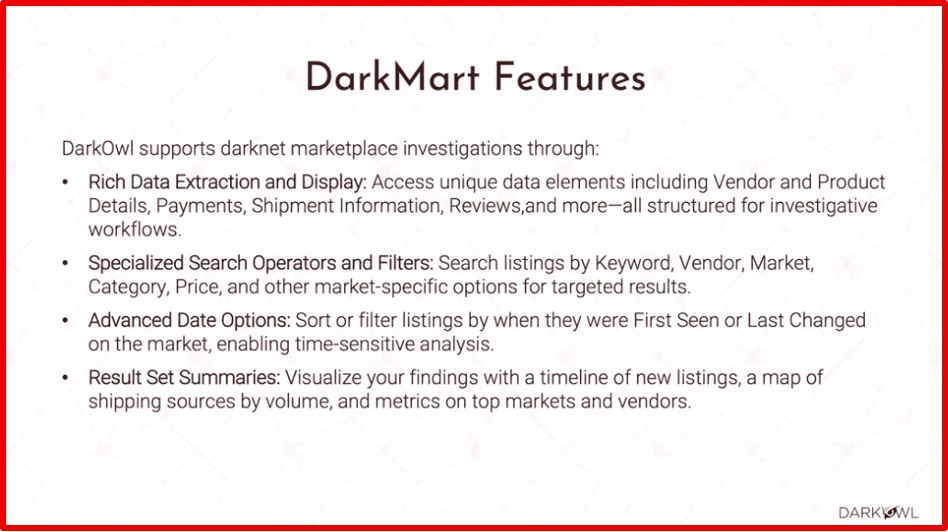
So anyways, fascinating stuff. Let’s go back to the marketplace topic where we kind of landed. And I know that you and your team mentioned to me that you’ve expanded your dark web marketplace collection pretty significantly and you have a new capability that you’re calling ‘Darkmart’, if I’m not mistaken. I’m wondering if you can, oh, there it is.  If you can give us a sense of kind of what that is and more importantly for those who are thinking about how open-source intelligence can support investigations, what does this kind of data tell you? What does it reveal? 

Alison – We did do a big revamp to our Darknet Marketplace Content, and what I mean by that is our collection was always strong in these areas, but the structure behind the data made the workflows somewhat manual and challenging to say, okay, well, I’m interested in this vendor on this one marketplace. So, what are the first 10 questions you want to ask? Like, well, what other markets are they on? What country do they ship from? What category are they? Do they have listings in? So we have taken all that data on our historical collect and put a lot more structure around it.

There’s an oversight view that I think has been, and this was from direct feedback from our users that has been really powerful in our launch of ‘DarkMart’, which is our word for these darknet marketplaces.  And to your direct question, doing these investigations in lieu of the structure was a time consuming process. So, now if you just look at some and choose any one bullet on here, just the ability to sort and sift through all of this marketplace data is a lot easier and more compelling.  And what we heard from some of our government clients is there are use cases you could be at, you know, be on the drug enforcement side of the house and you’re specifically tasked with a specific drug versus you could be someone who’s law enforcement in a small five eyes country that’s just trying to view what’s being sold coming out of their country. And those exact asks pre-structuring were hard to discern, whereas now with the marketplace data restructured within DarkOwl, you can do that much more quickly. I could even jump in and show an example of that. But the ability to sort and sift through this has just become so much easier with our new ‘DarkMart’ release. 
Jennifer – Well, that’s really powerful, as you say, without structure around the data, you have a richness, the riches of all the collection, but without the ability to gain the insight and I think, or at least not to do it conveniently, and if you’re not an expert, right, you’re, your analysts are all experts can do that, not every company, every entity, every government agency has people who are deeply experienced in that. So, having an interface to help you get there is really important.

Here’s a funny question because people talk about the dark web and the marketplace and such, what did the listings contain? Like, what does that look like?  And, and then maybe pivot off that, it’ll become obvious, but how does an investigator use that data? 

Alison – So I’m now in our platform right now. So, this is a live view into just the subset of our data that we call ‘DarkMart’. So, we have about half a million listings showing up right now and you can see that we have 83 markets that we’re now capturing in this new structured format. We still have a lot of markets that we’re moving over into this. It’s definitely an evolution. But for instance, if you wanted to just come in and see, you know, you were interested in what category and I mentioned earlier, like most of the listings are in narcotics, but I think all these other subsets are definitely growing in quantity as well.

But let’s see, let’s pop into one market.  So, this marketplace, Prime, has categories and vendors selling across all different subsets. So, to answer your direct question, you know, what do the actual listings look like? So, let’s actually wanted to pull up a more expensive one. So, here we have someone. So this, this is a good representation of how we’ve restructured this data.

So, within two clicks, we’re able to see, okay, here’s a vendor that goes by this username. And they were first seen on January 8th of this year. They last changed their listing a couple of weeks ago. And this is what they claim to have the, some source code for Bitcoin. They have a listing. You can contact them.  Let’s do business. Not business. So this, this would be pretty typical of a listing. There are also some that contain reviews and we always capture what currencies they’re operating in. So, as we think about this from like a country standpoint, in terms of, what people’s mission is this can be helpful as well. 

Jennifer – It’s literally vendor drugs for cheap.

Alison – Yeah. You can also go out into the live market and see what imagery vendors are presenting and what categories are growing. And I think this speaks back to your earlier, kind of that signals layer around, you know, what categories are growing from a marketplace standpoint, which would point to, you know, going back to those items and being like, what are we doing from a protection standpoint that we’re missing if these are so easily fraudulently being sold? 

Jennifer – I think that’s another benefit of the restructuring of the data and the interface for users is to get a sense of where the trend lines are and get that insight earlier in the cycle so that you, whatever your role might be somewhere, you can really start planning for it. 

Alison – In pretty short order, you can see the use cases both across government and commercial in terms of just what these listings look like. And as you mentioned earlier, and, you know, I won’t spend the time digging through a lot of these, but you can pretty quickly find someone for very cheap selling, you know, deep fakes, like you said, or access and all of these vendors are starting to specialize just like we do in industrial economy. So, that time to execute is so much shorter. 

Jennifer – Crazy. So, you mentioned earlier, I can’t remember the name of the vendor you mentioned, but you mentioned one of the big ones that was taken down in ’25. And so what happens when a major vendor does get taken down? I mean, I assume they pop up again somewhere else, but what do you see? What’s the normal pattern there?

Alison – Yeah. I just clicked on one of our vendors that we have in our marketplace. You can see that this vendor is, we believe, is active on 25 different markets. And you can see the number of listings as well. So, you know, the hypothesis there under the scenario you just described would be that if any one of these markets was either taken down by law enforcement or had a exit scam that those listings would migrate somewhere else. So, with this new restructuring, that is something we can absolutely track as things ebb and flow. And you can do it both at the vendor level. We’ve also had some of the shipping companies ask us to do it across and we have an awesome blog on our site around what is the preferred shipping method for criminals, which if you are, you know, working at one of those companies, whether it’s government backed or commercial, understanding why you’re being selected to ship those drugs versus someone else is important. The aggregation of this data can be really powerful and is something you can do today that wasn’t as easy prior to our data restructuring.

Jennifer – That’s awesome. It’s both scary but also really fantastic that the capability exists and that there are smart people working on all this stuff. I think also passing earlier, you mentioned Infostealer, kind of malware and it’s one of the big stories in cybersecurity is really the explosion in this kind of malware. I’m wondering, could you maybe spend a moment and let our colleagues online here understand what is DarkOwl seeing on the dark website of all of that dynamic? 

Alison – Yeah, absolutely. I mean, the number we are asked about Infostealer logs on multiple times a day and that is an emerging space. I have some stats written down here that Infostealer has infected over 11 million machines in 2025, estimate that it produced about 3 billion stolen credentials.  And that’s such a easy way for people to transact and probably the most traded commodity on the darknet. And the thing about the Stealer logs is they can bypass MFA entirely. I think there’s a lot of movement happening around people trying to protect against that. But in the meantime, the understanding that data is out there is very timely because they can be exploited almost instantaneously. So yes, Infostealers is a huge category. And I don’t see that decreasing. If anything, I think it will continue to grow and grow as people move away from traditional passwords. 

Jennifer – Yeah, I think the credential side is where a lot of the action is. And is, so, you know, everything is as a service these days? So, is this an area as well?  Have they jumped on the bandwagon? Is it malware as a service and all that? 

Alison – Yeah. I don’t have it handy right here, but there’s malware as a service subscriptions that start as low as $30 a month. So yeah, the specialization and the execution and frankly the price is coming down precipitously. 

Jennifer – You see that I think across all of these, let’s just say more nefarious corners of the web where the “as a service” is exploding. You’ve had ransomware as a service. Now malware as a service, specifically credentials, deep fakes as a service. Everything’s a service these days. Even criminals are innovating, right? 

Alison – Yeah.  There’s, I mean, we have one of, I would say probably one of our most frequently visited, or some of our most frequently looked at telegram channels are those that are selling, stealer log subscriptions. And you and I in preparation for this call, were talking about how as recently as January, there was a researcher that discovered that database containing like 150 million login password pairs.  And they think it was compiled entirely from Infostealer operations. So, that gives you a sense for the scale.

Jennifer – So I, you know, intuitively, I gather that there’s a specific connection here in the supply chain for ransomware.  And I’m wondering, you know, what, what does that supply chain look like for, for bad actors in the ransomware, ransomware world?  Say that three times fast. 

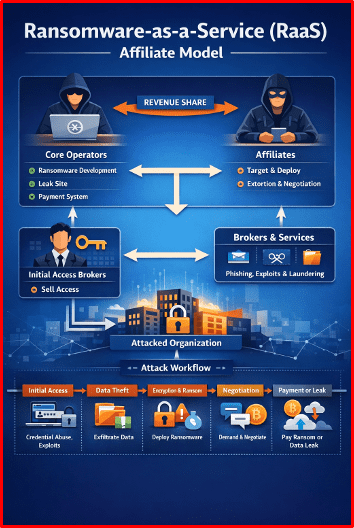
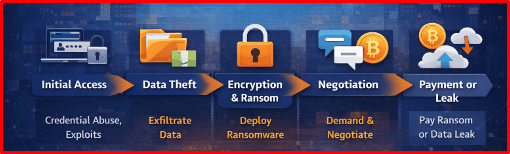
Alison – Yeah, in the same way that all the market dynamics work on the customer service side, you know, the same exists from a supply chain standpoint.  think a pretty typical supply chain workflow would be that the infostealer harvest, like they grab the credentials, then the initial access broker would like package those up and sell them on a marketplace or on one of those telegram channels. And then the ransomware operators buy those, that access. And then they get in and grab the files and then, you know, approach company and say, yeah, here’s what I have and, and pay the ransomware. So, it’s definitely, and we talked about this earlier, the specialization is happening in the same way it’s happening for all of us on the right side of the fence. 

Jennifer – Yeah, exactly. Thank you.

Like all things, I have to assume that the dramatic improvements in generative AI are having a big impact in this area. Is that correct?  I mean, is that accurate to assume that AI is also fueling this pipeline? 

Alison – Yes, absolutely. And you know, they also have the advantage of not having to ensure that those AI deployments are being done in an ethical or safe or sort of consumer-friendly way. So, some would argue that, that speed of adoption is even faster in this ecosystem. 

Jennifer – Let’s scope out a little bit, zoom out. Around the world, we’re seeing a lot of interest in regulatory action around the space. Leak, you know, legislation, like Europe’s been very active in these, these related categories with all sorts of protections on data and the models that are used for AI and lots of other things. And in here in the States, of course, the SEC has its own filing requirements for those who will fall prey to ransomware and other cyberattacks. But I’m just wondering if one does agree that there’s an upsurge, uptick in interest in regulatory and legislative actions in this space. Does that change the calculus for companies, organizations, government agencies and departments on the kinds of intelligence or insights that they would want to collect from the darknet? 

Alison – I think there’s a shift happening or it’s already happened from a reactive to more of a proactive intelligence posture. I’m going to date myself a little bit, but I’ve been at DarkOwl coming up on either 10 or 11 years, and I remember one of the first demos I ever did was with a CISO and, and she said to me, I don’t think I want to know if the information’s out there.  And, you know, I think that was, knowing was not, knowledge was not power at that time. That was potentially, oh, no, we haven’t done our job as an organization, or we haven’t protected our information. Whereas in today’s world, you can just walk the floors of any cyber conference, the number of TPRM and third-party risk management providers has skyrocketed. So, the responsibility and the onus to know not only what’s out there, but how it got out there, and have that proactive angle of like, I’m hiring a vendor in this category.  You know, are they reputable?  Do they have exposure is becoming the norm? Compared to what it was previously. 

Jennifer – Now, that makes a lot of sense. Ultimately, it just seems wherever one is in this ecosystem on the right side of the fence, as you say, your ultimate goal is to collapse the timeline between exposure of data and vulnerability, and the bad actor’s ability to use it against you. And having that insight, particularly from deep collection and kind of an interface and analytic framework around it would be super helpful. And unlike the CISO that you met years ago, I think more and more CISOs and cyber defenders today are eager to get those insights so that they can be prepared before the bad day happens. That makes me think though, because you mentioned the CISO and others working in cyber defense and risk. Is there something about the darknet threat landscape that you think they consistently or that many consistently underestimate? 

Alison – Um, yeah.

Jennifer – You know, some key aspect of it, you wish people would understand better or maybe they just don’t have the insight yet. 

Alison – It’s that the old methodology is we just need to kind of protect our own four walls, batten down the hatches and whatever’s happening outside is not telling or informative. And that is not the case. The darknet can be very much a leading indicator of what that exposure looks like, where those vectors of attack might be coming from. Demonstrating and making sure that people have visibility is extremely important, not just that they responded correctly to an attack. 

Jennifer – And attacks are far more, intrusions are far more, sophisticated and subtle and multi-layered than they were even just a few years ago and I think understanding the threat environment and the threat environment around all of your partners and vendors and anything in your supply chain is really critical because you’re only as secure as the weakest link in that chain.

Alison – Yeah, not only like the weakest link, but the speed at which that stolen data moves from exposed to exploitation is fast.

Jennifer – That timeline is collapsing pretty dramatically. I think if you go back just a few years when a vulnerability was identified and publicized in order to get patches, you had time, right? Today that timeline is really collapsed with the power of AI and how bad dudes can manipulate that to get an exploit out of a vulnerability through reverse engineering. It’s really, really rapid.

So lots of value out there in this kind of information. And I think really relevant to investigators and analysts across a broad range of functions. So, we’ll turn to our friends and colleagues who’ve dialed in in a moment, but maybe last kind of question forward-looking, right?  So, let’s look out over the next couple of years and if you had to, your crystal ball, how does that threat landscape evolve? And as we’ve touched on once or twice already, how does AI fit into that picture?  Both for, let’s say the threat actors who are out there, how is it gonna help them?  But also for defenders because we want to defend.

Alison – My short answer would be that this category of data will continue to be a very integral part of investigations. I think historically has been either overlooked or bypassed because it was hard to aggregate and look through this data alongside other data, but that’s where AI is gonna be so powerful in that respect. Do I think if we did the same webinar five years from now that Telegram would be where everyone was communicating? Probably not. I think that where all that happens, I think we’ll continue to flux, but there will, I don’t see any scenario where this data isn’t an important piece of the puzzle. And I think looking at the bigger puzzle is a much easier task with some of the amazing developments that are happening in AI, so that organizations like the one you work for aren’t that timeline to figuring out or getting some intelligence that could lead to an action or investigation should be shorter as well, not just the criminals are gonna benefit from AI. 

Jennifer – Yeah, thank you.  We don’t want them to benefit but the defenders need to benefit. So, we’ve spent about 45 minutes and we’ll turn to questions here in a moment, but if let’s just say it for the folks who’ve dialed in and maybe later for those who watch on the platform, is there something you think that someone should go do? Like if they return to the office, is there something that they might take away from this conversation? Is there an action that would be helpful for them?

Alison – The low hanging fruit is out there. Go get a dark web risk assessment done, understand what information both of your own as an individual or your organizations is out there. And that will give a lot of insight into where, I think that would be the one task I would do in short order. And then if there are folks on the phone that are doing investigations in this space, I would just think about time and energy spent having someone who can aggregate this information and make it searchable and queryable is gonna be a good use of that skill set so that those analysts continue to connect the dots but aren’t spending 20 minutes waiting for a tor page to load.

Jennifer – Yeah, exactly. So, I wanna encourage anyone who’s on the call to drop a question in the chat.  I have it up on my screen here, we’ll watch for those.

You know, not every organization is big with a wealth of resources, right? And a lot of small organizations out there that might have more limited both capabilities due to fewer staff and resources in terms of money. But is there an entry point for smaller organizations when it comes to darknet data and intelligence? 

Alison – Absolutely, and oftentimes, from a just pure economic standpoint, the price point of a dedicated darknet tool for a smaller medium business might not be feasible but there is dark web data going into everything from larger thread intel platforms to MSSPs. I think we all know that those small and medium businesses are oftentimes the target just as much as the bigger ones, just given that actors know that they don’t have the security posture of a bigger firm. So, I do think there is, not only can this data help a small and medium business, but I think there are more ways for them to get that today given that this data is being fed through a lot of different layers, not just directly. 

Jennifer – Now, I think the vulnerability of small and medium size enterprises is really something that needs much more attention and I add into that group, charitable organizations, hospitals, schools, community colleges, lots of places that you wouldn’t think should be huge targets but they’re lucrative targets for the ransomware world because they’re often less defended and criminals go back there because they’re successful. So, a really important area, I think, for dark web data to help give insights into what the threat landscape reveals about their organizations. 

There are a lot of companies out there who offer a variety of different kind of threat intelligence insights.  And everyone’s kind of packaged differently, they do different things. Is there differentiation there? I mean, there are some big names out there that I won’t mention, but how in that environment are these capabilities differentiated or are they all the same?

Alison – No, they’re definitely not all the same and I think it comes down to, you know, depth of collection in any one area and the structure and usability of that data.  And there’s some, there are a lot of folks aggregating threat intel from all different data sources. I think DarkOwl, one of the reasons I love our mission is that we are so committed to staying focused on this space and continuing to provide compelling data. It comes off the dark web and not trying to spider into other areas. So, we’re often turned to fill that plug for other organizations. But yes, everyone has pros and cons. I mean, it’s a big Venn diagram and we’re a data provider and there’s gonna be overlap with others, but there’s oftentimes a delta between a lot of the different providers. 

Jennifer – Awesome.  I’m gonna ask maybe another question. While we wait to see if anybody has something that is burning in their minds. So, I don’t mean this one to sound like a challenge, right? But I’ve heard this question. So, you talked about personas and the collection and over time.  Are you ever asked about the legality of all of that? And I know more. 

Alison – Yes. All the time, oftentimes from people applying to jobs, how are you able to legally do this?  You know, we’re, I think the title of this webinar and the tech expo that we’re attending next week, it’s all around OSINT, open-source intelligence and DarkOwl skill resides on the fact that this data is hard to get to and it’s hard to find and it’s time consuming to get to. But at the end of the day, it is open-source information.  So, we are able to legally collect this because it’s defined as open source. It may be hard to get to.  You may have to create a login or become part of a community, but that’s the definition and we follow DOJ guidelines and we don’t purchase stolen data. We don’t go behind firewalls. So the data that we hold is ethically collected and considered open source. 

Jennifer – Great. I knew that, of course, being on the board. But I just wanted others who might have that question, because I’ve heard that question before too. So, I just wanted others to hear directly from you. 

And then maybe as a final question just because of the world I came from before coming into the private sector, my sense is that nation-state actors out there use a lot of the same darknet infrastructure as the criminals do. A, I guess, is that accurate? And B, are there areas where those two worlds overlap most directly? 

Alison – I mean, yes, in terms of targeting the US.  I was in preparation for this looking up some stats and IBM X-Force produced a report that said that North America is now the most attacked region for the first time in six years. So, from a nation-state perspective, there is no doubt that the targets on our back may be more so than ever an understanding that all of these ecosystems support those nation-state actors as well as the reality. 

Jennifer – I think that reflects a growing sense that I’ve had or insight that I had in government too.  But it’s clearer now that how a lot of these activities, these illicit activities against companies and organizations in the country really have a national security flavor to them these days and kind of teasing apart what is a national security threat, what is a commercial threat, what’s an economic threat.  These days, that’s harder and harder because it’s just, it’s all interconnected in a way that’s really powerful today.

So, I think we are nearing the end.  Maybe Allison, is there any last bit of advice or observation you want to offer for those who’ve dialed in? 

Alison – I do want to share with folks that we, DarkOwl, will be attending the OSINT Tech Expo next week, which is being hosted by Carisoft at their office in Reston, Virginia.  So, if anyone on the call is attending, and correct me here, Gabi I think if they’re a government employee, they’re able to attend either a free or at a reduced cost. But anyway, I just wanted to highlight that.  We will be attending.  And if any folks want to see the data set live, I’d be more than happy to do that for anyone. 

Jennifer – Well, that’d be fantastic. In the notes, I’m going to call an audible here and ask if maybe Gabi can help us in the notes afterwards just to make clear, to specify how people can look for that expo.  I see it’s on the screen here, but maybe in the notes later, it’ll be helpful as well.  OK, so I want to say thanks to Alison who sat here through an interrogation for almost an hour and answering question after question.  I really thank all of you as well who signed in to listen today and then welcome those who watch on the platform later.

And I should take a special note here as well for Carahsoft for hosting and organizing the webinar.  And if folks walk away with maybe one thing, there’s lots in what Alison had to say.  But I think for me, I would just note that the dark web is no longer, dark web data is no longer something just for a few specialized investigators. I think with the advent of new tools and ability to query and analyze the data, I think it becomes a much more useful capability for a broader range of folks in government and in industry.  And so it’s kind of your live feed, if you will, on how the criminal ecosystems are changing and how the threat landscape is changing.  And ultimately, whether you’re in government or industry, it should give you a better optic into how you protect yourself.  You monitor the threat landscape in order to protect yourself and your friends and allies. So, we will make sure that there are links to all the DarkOwl resources in the notes later.  And as Gabi said, if somebody has a question that didn’t get answered during the webinar, DarkOwl will be happy to answer it after.  And everyone hopes to see as many of you as possible at the OSINT Expo being hosted by Carahsoft at the end of the month.  So OK, I think with that, I’ll turn it over to you.

Alison – Thank you, Jennifer.  I just want to thank you personally.  You’ve been so helpful to DarkOwl and the pace at which you operate in a post-retirement state and amount of businesses and speaking engagements and you still have your finger on the pulse and I’m very grateful that you’re on our board.  So, thank you.

Jennifer – Oh, thank you.  It’s a pleasure, and you’ve got a great team.  Great team, great product. 


Questions? Contact Us.

Understanding the Cyber Incident Reporting for Critical Infrastructure Act (CIRCIA)

April 28, 2026

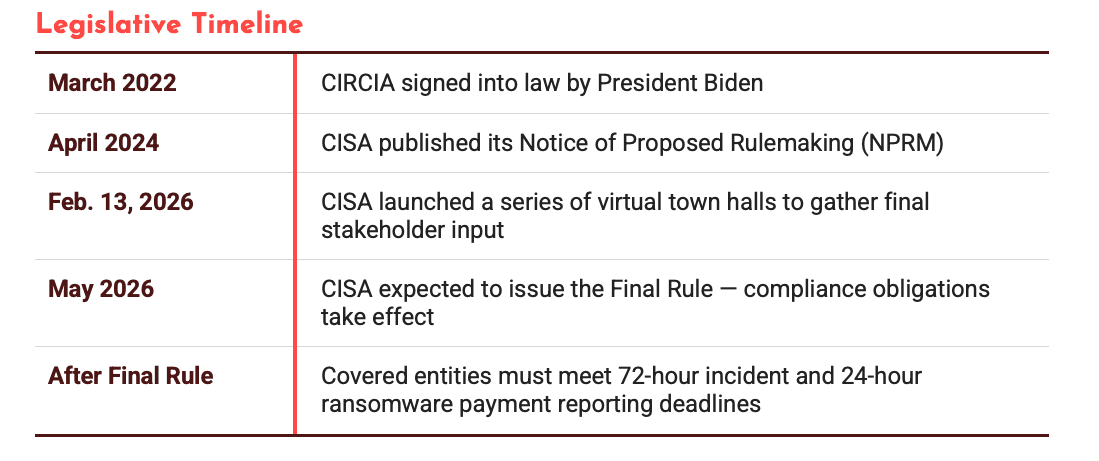
The Cyber Incident Reporting for Critical Infrastructure Act (CIRCIA) represents one of the most significant shifts in U.S. cybersecurity regulation in over a decade. Signed into law in March 2022, CIRCIA establishes mandatory cyber incident reporting requirements for organizations operating across all 16 critical infrastructure sectors. With CISA’s final rule expected in May 2026, the window for preparation is rapidly closing.

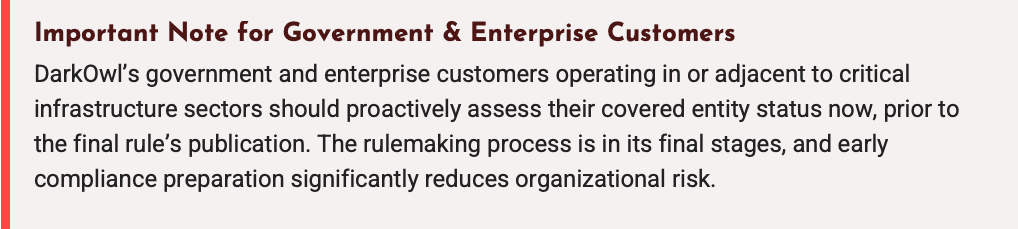
This blog explains what CIRCIA requires, which organizations are subject to compliance, and how DarkOwl’s dark web intelligence platform positions covered entities to meet their obligations proactively—before an incident ever occurs.

CIRCIA—the Cyber Incident Reporting for Critical Infrastructure Act of 2022—grants the Cybersecurity and Infrastructure Security Agency (CISA) authority to mandate reporting of cyber incidents and ransomware payments from owners and operators of critical infrastructure. The law tasks CISA with developing and enforcing a rulemaking process that creates standardized, time-sensitive reporting obligations across the private and public sectors.

Substantial Cyber Incidents: Covered entities must report significant cyber incidents to CISA within 72 hours of reasonably believing an incident has occurred.

Ransomware Payments: Any ransomware payment made by a covered entity must be reported to CISA within 24 hours of the payment being made.

These requirements are not merely informational. Organizations must demonstrate that they have the infrastructure and processes in place to detect incidents, assess their significance, and report within these tight windows. Failure to report carries legal consequences, including subpoena authority granted to CISA.

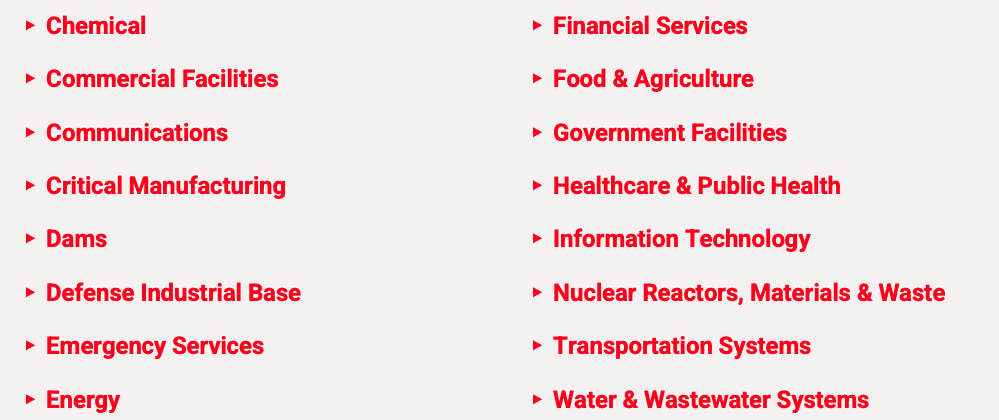
CISA estimates that approximately 300,000 entities will be subject to CIRCIA’s reporting requirements once the final rule takes effect. Coverage spans all 16 critical infrastructure sectors designated by the Department of Homeland Security:

The final rule will define specific thresholds and criteria for which organizations within each sector qualify as “covered entities.” Based on the NPRM and public comments, covered entities are expected to include:

Importantly, covered entity status is not limited to large enterprises. The breadth of the estimated 300,000-entity scope reflects CISA’s intent to create comprehensive visibility across the critical infrastructure ecosystem, from utilities and hospitals to transportation networks and financial institutions.

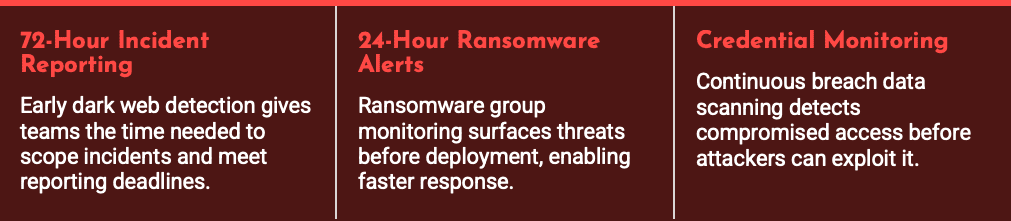
CIRCIA’s reporting obligations create a fundamental challenge: organizations cannot report what they cannot detect. The 72-hour window for substantial cyber incidents and the 24-hour window for ransomware payments demand that covered entities have continuous, proactive threat detection capabilities—not reactive, post-breach discovery processes.

DarkOwl provides dark web intelligence and credential exposure monitoring that directly addresses this challenge. Our platform enables organizations to identify indicators of compromise, data exposure, and threat actor activity before they escalate into reportable incidents—or to detect them the moment they do.

Threat actors frequently surface intent, tooling, and stolen data on dark web forums, marketplaces, and encrypted channels days or weeks before a formal attack is launched or discovered by the target organization. DarkOwl’s continuous monitoring of these environments provides covered entities with:

  • Early warning of data exfiltration, including stolen credentials, proprietary documents, and sensitive internal communications appearing on dark web markets
  • Detection of ransomware group communications referencing an organization or its vendors, often preceding deployment of ransomware payloads
  • Identification of threat actor reconnaissance and targeting activity associated with specific sectors or infrastructure types
  • Alerting on newly compromised credentials that may indicate an active breach or imminent attack

This intelligence directly supports the 72-hour reporting window by giving security teams a head start—enabling them to investigate, scope, and assess the significance of potential incidents before the clock starts.

Credential theft is among the most common precursors to significant cyber incidents. Compromised usernames and passwords—particularly those tied to privileged accounts, VPNs, or cloud infrastructure—frequently appear on dark web forums and criminal marketplaces following data breaches at third-party services.

DarkOwl’s credential exposure monitoring enables covered entities to:

  • Continuously scan for employee and customer credentials appearing in dark web breach compilations and stealer logs
  • Receive actionable alerts when new credential exposures are detected, enabling rapid password resets and account lockdowns
  • Attribute credential exposure to specific breach events, supporting incident scoping and regulatory notification decisions
  • Maintain an ongoing audit trail of exposure detection and response actions—critical documentation for demonstrating compliance due diligence

CIRCIA does not simply require organizations to report incidents—it implicitly requires that they have the detection infrastructure capable of identifying those incidents within compressed timeframes. Regulators and legal counsel will increasingly ask whether covered entities exercised reasonable diligence in monitoring for threats.

By deploying DarkOwl’s platform, organizations create a documented, auditable record of proactive threat intelligence activity. This serves multiple compliance functions:

  • Evidence of reasonable cybersecurity diligence in the event of a regulatory inquiry or breach litigation
  • Structured detection workflows that align with incident response plans and reporting procedures
  • Intelligence feeds that can integrate with SIEM, SOAR, and incident response platforms to accelerate detection-to-reporting timelines
  • Sector-specific threat intelligence relevant to each of the 16 critical infrastructure categories

CIRCIA’s scope extends to organizations that are integral to critical infrastructure operations—including technology vendors, managed service providers, and supply chain partners. A breach at a third-party vendor can create a reportable incident obligation for a covered entity, even if the covered entity’s own systems were not directly compromised.

DarkOwl supports supply chain risk management by monitoring for dark web activity associated with key vendors and third-party partners, providing covered entities with a broader view of their threat exposure across the entire organizational ecosystem.

CIRCIA represents a fundamental shift in how the U.S. government expects critical infrastructure operators to approach cybersecurity. Mandatory reporting obligations, compressed timelines, and broad sectoral coverage create both regulatory urgency and strategic imperative: covered entities must build proactive threat detection capabilities or face significant compliance risk.

DarkOwl’s dark web intelligence and credential exposure monitoring platform is designed precisely for this environment. By surfacing threats early—often before they escalate into reportable incidents—DarkOwl enables covered entities to meet their CIRCIA obligations, demonstrate proactive due diligence, and strengthen their overall security posture.


How can DarkOwl help your company prepare for CIRCIA compliance? Contact Us.

Ransomware in 2025: A Year of Record Attacks, Rising Costs, and Expanding Threat Actors

April 14, 2026

If 2024 signaled that ransomware was becoming a systemic threat, 2025 confirmed it. Over the course of the year, ransomware evolved into one of the most disruptive forces in the cyber landscape, affecting thousands of organizations and costing billions of dollars in damages. What distinguishes 2025 is not just the scale of attacks, but the speed, accessibility, and industrialization of ransomware operations.

In this blog we will review ransomware attacks in 2025 and how they have evolved.

Estimates of global ransomware attacks in 2025 ranged between roughly 7,400 and more than 9,000 incidents, representing a sharp increase, at around 40–50 percent increase over the previous year. On average, attacks were occurring at an almost continuous pace worldwide, with hundreds of organizations falling victim each month.

Victim counts followed a similar trajectory. In some datasets, more than 7,000 organizations were publicly identified as ransomware victims, while others tracked thousands more unreported or undisclosed incidents. Growth rates in victim numbers exceeded 50 percent year over year, and the final quarter of 2025 alone saw record-breaking figures.

What stands out is not just the volume, but the breadth. Ransomware was no longer reserved for high-value, carefully selected targets. Instead, it became a high-frequency, opportunistic threat—impacting organizations across every sector and size.

One of the characteristics of ransomware activity in 2025 was its focus on critical industries. Roughly half of all attacks targeted sectors that underpin modern economies, including manufacturing, healthcare, energy, transportation, and financial services. Manufacturing, in particular, emerged as the most frequently targeted industry, accounting for a significant share of global incidents.

When production lines halt, hospitals lose access to patient systems, or energy infrastructure is disrupted, the pressure to pay a ransom increases dramatically. Cybercriminals have become adept at identifying and exploiting this urgency.

At the same time, small and medium-sized businesses continued to bear a disproportionate share of attacks. With fewer resources to invest in cybersecurity and often relying on outdated systems, these organizations presented attractive, low-resistance targets. Ransomware groups no longer needed to focus exclusively on large enterprises to generate profit; scale alone could drive returns.

Geographically, the United States remained the epicenter of ransomware activity, accounting for roughly half of all recorded attacks. Thousands of incidents were reported across the country, with Europe as a whole, and Canada also experiencing notable increases. This concentration reflects both the density of high-value targets and the interconnected nature of global supply chains.

While ransom payments themselves often make headlines, they represent only a fraction of the total economic impact. In 2025, global ransomware damages were estimated at tens of billions of dollars, with some projections placing the figure as high as $57 billion.

The average cost of a ransomware attack, including downtime, recovery, legal fees, and reputational damage hovered around $5 million. Even when companies chose not to pay the ransom, recovery costs alone frequently exceeded $1 million.

Furthermore, a single attack could also impact supply chains, disrupting thousands of dependent businesses. Industry analyses throughout 2025 consistently highlighted the systemic impact of ransomware events, particularly in manufacturing and industrial sectors.

The tactics used by ransomware groups in 2025 reflected a shift toward greater sophistication and efficiency. Double extortion became the standard model, with attackers not only encrypting data but also exfiltrating sensitive information and threatening to release it publicly. This ensured leverage even when victims had reliable backups.

In some cases, the data was not even encrypted with victims being extorted purely on the basis of the risk posed by having their data exposed. This approach reduced operational complexity while maintaining high pressure on victims.

Artificial intelligence also played an increasingly important role. AI-driven phishing campaigns enabled attackers to craft highly convincing, personalized messages at scale, dramatically improving success rates. Automation allowed cybercriminals to launch and adapt attacks more quickly than ever before, compressing timelines and overwhelming traditional defenses. There were also the beginnings of AI being used to develop ransomware or utilize it which has been observed in early 2026.

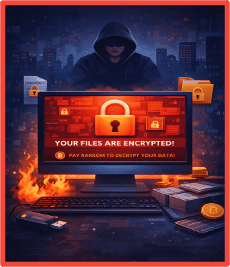
Underlying all of this was the continued growth of ransomware-as-a-service (RaaS) platforms. These ecosystems provided tools, infrastructure, and support to affiliates, allowing even relatively inexperienced actors to carry out sophisticated attacks. As a result, the number of active ransomware groups expanded significantly, with well over a hundred groups operating throughout the year. DarkOwl monitors these leak sites so organizations can monitor if any companies in their supply chain have been impacted.

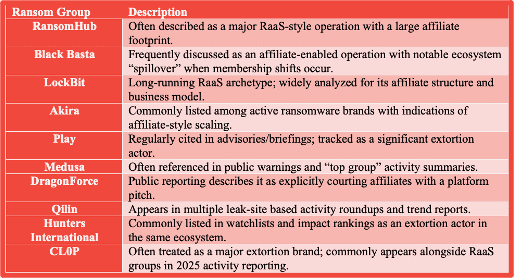
In 2025, several groups stood out for their scale and impact. Qilin emerged as one of the fastest-growing ransomware-as-a-service operations, leveraging an affiliate model that enabled rapid expansion and a steady stream of attacks. Its accessibility made it particularly influential in lowering the barrier to entry for new cybercriminals.

Akira was another prominent group, targeting enterprises and critical infrastructure with a high volume of attacks.

RansomHub gained notoriety for sheer scale, reportedly linked to hundreds of victims across multiple sectors.

Meanwhile, Clop continued to execute large-scale campaigns, often exploiting vulnerabilities in widely used software to compromise multiple organizations simultaneously.

In addition to these established groups, 2025 saw the rise of more fluid, collaborative networks—sometimes described as “supergroups”—where actors shared tools, infrastructure, and intelligence. This blurred the lines between distinct organizations and made attribution more difficult.

Ransomware in 2025 was defined by scale, speed, and systemic impact. Attacks reached record levels; victims spanned every sector, and the financial consequences extended far beyond individual organizations. The rise of new groups, maturation of existing groups, and the evolution of attack methods underscored a fundamental shift: ransomware is no longer a niche cyber threat but a core challenge for modern economies.

As organizations look ahead, the lessons of 2025 are clear. Defending against ransomware will require not only stronger technical controls but also a deeper understanding of the threat ecosystem, greater resilience in critical systems, and a willingness to adapt to an adversary that continues to evolve.


Curious how DarkOwl tracks ransomware activity? Contact us.

What Movies and Shows about Cybercrime Got Right and Wrong

April 08, 2026

Imagine this: you throw on a black hoodie, turn off the lights, and sit hunched over your computer while lines of code fly across the screen. Congratulations you’re officially a “hacker.” At least that’s how movies and TV have trained us to picture it.

For decades, pop culture has leaned hard into the stereotype of the mysterious genius typing furiously in the dark, breaking into systems in seconds while dramatic music swells. Most of the time it’s wildly exaggerated, sometimes to the point of being laughable. But every now and then, a show or film comes along that actually gets parts of it right.

In this blog, we’ll review some of our favorite portrayals of hacking in media and what they nailed, what they completely missed, and why some stand out as surprisingly realistic in a sea of blinking screens and instant “I’m in!” moments. 

When it comes to television series that portray cybercrime with striking realism, USA Network’s Mr. Robot consistently ranks among the best. Airing from 2015 to 2019, the series centers on a young cybersecurity engineer in New York City whose exceptional hacking skills draw him into an underground collective of hacktivists. As he becomes entangled in their mission to dismantle corporate power structures, he evolves into a deeply flawed and morally conflicted cyber-vigilante.

Within the first episodes of the show, Hollywood’s normal treatment of hacking is thrown out the window. What would normally be shown as maniacal keyboard typing was instead focused on social engineering and email phishing. By showing these acts, it aligned more closely with activity seen by real life threat actors.

A component of Mr. Robot’s accuracy is derived from experts behind the scenes. The show consulted with Michael Bazzell, a cybercrime detective with 10 years’ experience with the FBI. In interviews, Mr. Bazzel states that all code used in the show was real and was created by the individuals on the team. If aspects of the hacking were unable to exist in the real world, those storylines would often be scrapped. Many individuals within cybersecurity applauded the show’s accuracy, expressing positive opinions of legitimate attack patterns and authentic hacker methodology.

Released during the Cold War, the 1983 film WarGames follows high school student, David, who accidently hacks into a military computer and wages a war between the U.S. and USSR. After David mistakenly identifies the military supercomputer as belonging to a video game company, two experienced hackers introduce him to the concept of “backdoor passwords.” Using this hidden access method, they can bypass normal security protocols and enter the system, reinforcing the film’s surprisingly realistic portrayal of early computer security vulnerabilities.

Despite a seemingly unrealistic plot, President Reagan ordered a full national security review after viewing the film. This led to a determination by the Joints Chief of Staff that the plot was “technically possible” and 18 months later, President Regan released the first Presidential directive on computer security. Eventually the Computer Fraud and Abuse Act was passed in 1984 with the House Committee making specific reference to the film.

One of the key factors behind the film’s technical credibility was due to the depth of its research. During development, the screenwriters consulted with Willis Ware, author of the influential 1967 paper, Security and Privacy in Computer Systems. Ware confirmed that military computer systems could, in fact, have remote access points — a detail that helped shape the film’s central premise.

Leveraging the star power of Chris Hemsworth, the 2015 action thriller Blackhat follows a furloughed convict and elite hacker who becomes the only person capable of helping authorities track down cybercriminals responsible for breaching a nuclear power plant. While the film delivers explosive, high-stakes action, many cybersecurity experts have noted that its depiction of hacking techniques reflects a surprisingly authentic approach to real-world cyber operations. While the film eventually departs from realism, many experts praise the setup and the more practical elements presented in its first half.

The characters in the film are trying to prevent a malware attack, based on the Stuxnet attack, targeted at critical infrastructure. The Stuxnet attack refers to the 2009 malware attack that caused substantial damage to the Iran nuclear program after it was installed on computers at the Natanz Nuclear Facility. The malware reportedly destroyed one-fifth of Iran’s nuclear centrifuges.

Viewers also praised the film for its relatively authentic portrayal of hacking. Instead of relying solely on flashy visuals, it depicts Chris Hemsworth’s character working with black terminal screens, command-line arguments, and tools such as Tor and keyloggers. Like many successful tech-focused films,  Blackhat relied on multiple consultants during the development and production phases. One of the most prominent was former blackhat hacker turned journalist Kevin Poulsen, who previously served three years in prison and contributed extensively to the film’s technical realism. Some viewers have even speculated that Hemsworth’s character was partially inspired by Poulsen. Another consultant was mathematician Christopher McKinley, known for his analysis and hack of the dating site OKCupid.

While researching shows and movies for this blog, one theme repeatedly appeared when discussing believability: time. To maintain pacing and excitement, many portrayals show hacking happening almost instantly. After only a few keystrokes and quick swipes across a screen, the hacker is suddenly inside the most secure government databases. For instance, in the 2001 film Swordfish, the main character is held at gunpoint and forced to hack into the DEA’s system; something he manages to accomplish in just sixty seconds.

A separate scenario seen in entertainment, especially when focused on law enforcement, is when a victim “knows” they are being hacked. The main point of hacking a system is to do so as quietly as possible in the hopes to acquire a large amount of information. Additionally, systems will rarely start displaying UI elements that would notify you that your system is under attack.

A common theme in many cybercrime films and television shows is the choice of targets. These stories often focus on hackers going after the biggest and most powerful entities, such as governments or major financial institutions. In reality, the most frequent victims of cyberattacks are ordinary individuals who often lose personal information when hackers breach databases containing private customer data.

And finally, even though the media often depict someone yanking the power cord from a monitor to stop a hack, remember that unplugging your monitor won’t actually stop an attack on your system.

A trend seen with many of the shows that are praised for being realistic is the use of consulting with experts in the field. Sometimes real-world events are so strange or unbelievable that they feel like they were written for TV. Those moments can make great plot devices and when shows draw from situations that have happened, it can make their stories feel even more realistic.

As demonstrated by the film WarGames, fictional stories can still drive real-world change. President Reagan’s inquiry following the movie prompted intelligence efforts to strengthen the United States’ defensive and offensive cyber capabilities. This underscores one of the many reasons why getting these portrayals right matters – entertainment projects can leave a lasting imprint on history.


Subscribe to our weekly newsletter to get the latest delivered to your inbox!

Inside Dark Web Marketplaces: How Law Enforcement Dismantles Them

March 17, 2026

The dark web has become a central marketplace for criminal and illicit activity, which ranges from data breaches and identity theft to the sale of illegal goods. Unlike the surface web (publicly accessible websites) and the deep web (private databases, internal systems), the dark web can only be reached through specialized tools such as the Tor browser. Although it was originally created to enable anonymity and protect user privacy, the dark web has increasingly become a hub for cybercriminal activity.

Dark web marketplaces are concealed online trading platforms that typically operate on Tor or similar networks, where anonymous sellers offer illegal goods and services. Marketplaces rely on layered security and trust systems (user verification, escrow, and PGP(pretty good privacy)-encrypted transactions), often with updates shared via channels like Telegram. To avoid takedowns, many rotate domains or use mirrors. But invite-only platforms limit access to vetted users, strengthening their safeguards.

As these threats continue to grow, law enforcement agencies around the world are stepping up their efforts to disrupt and dismantle dark web networks. Through coordinated international operations and the use of advanced digital forensics, organizations like the FBI and Europol are making measurable progress in breaking down these hidden criminal ecosystems.

Over the past several years, international law enforcement agencies have successfully dismantled multiple major dark web marketplaces. Below are brief rundowns of some of the more famous seizures of dark web marketplaces.

WallStreet Market

Prior to its seizure, Wall Street Market was the second-largest dark web marketplace in the world.In 2019, law enforcement, led by Europol, were able to track the IP address of one the administrators following the failure of their VPN. The operation involved Germany, Australia, Denmark, Moldova, Ukraine, the United Kingdom (the National Crime Agency), and the USA (DEA, FBI, and IRS), showcasing a successful cross border collaborative effort.  

Hydra Market

In 2022, the Justice Department successfully investigated and dismantled Russian marketplace, Hydra, which at the time was the largest and longest-running marketplace on the dark web. Beginning in 2015, Hydra accounted for an estimated 80% of all dark web market related cryptocurrency. In conjunction with German authorities, the IRS Criminal Investigation branch used cryptocurrency tracking methods to identify criminals using the site and pinpointed physical server locations. German authorities were then able to arrest Dmitry Pavlov, the infrastructure provider.

Archetyp Market

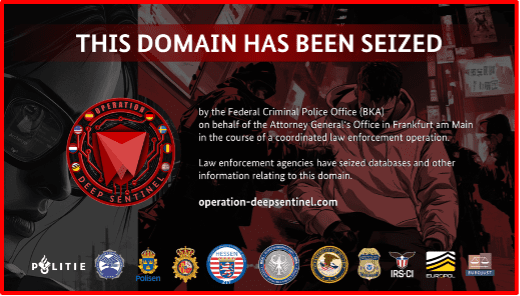
In June 2025, law enforcement agencies across Europe dismantled “Archetyp Market”. At the time, the market had obtained over 600K users and boasted a total transaction volume of 250 million euros. The operation, titled Deep Sentinel, unfolded over several years with investigators tracing complex financial flows and conducting extensive digital forensic analysis. More than 300 officers from Germany, the Netherlands, Romania, Spain, and Sweden coordinated efforts to dismantle the network and targeted platform administrators, moderators, key vendors, and the underlying technical infrastructure.

By combining cyber expertise, undercover operations, and partnerships, law enforcement continues to evolve its playbook to disrupt dark web marketplaces. While these shutdowns don’t eliminate the activity entirely, they create a chain reaction undermining trust in major platforms and making vendors and buyers more cautious about where and with whom they do business.

Over the course of law enforcement’s fight against dark web marketplaces, agencies have developed and evolved an arsenal of tools and strategies to discover and dismantle the operations. Below are a few commonly used practices used in major marketplace takedowns and seizures.

Undercover Operations In some instances of dark web marketplace takedowns, agencies will take over a market by pretending to be an administrator.In 2017, Dutch authorities operated the Hansa marketplace for approximately one month, enabling them to identify and track user information. Similar tactics have been employed by the FBI, which has previously infiltrated marketplaces and conducted small purchases to collect intelligence on sellers and administrators.

Blockchain forensics – Using blockchain forensics/intelligence, investigators are able to follow the flow of digital assets and can identify wallets that cybercriminals use to store illegal funds. This tactic has been employed in multiple dark web marketplace seizures (Silk Road, Hydra) by providing investigators with a means to identify those operating the site. Once thought to be untraceable, the process has frequently enabled the identification of cryptocurrency transactions.

Network Investigative Techniques (NITs)In previous marketplace seizure cases, the FBI has used NITs to discover users IP or identity. These operations are authorized via a warrant and use malware or exploits to extract information from users and administrators active in the marketplace. As demonstrated in numerous cases, NITs are routinely used by law enforcement and have drawn scrutiny over the scope of data they are able to collect.

As new dark web marketplaces emerge and expand, law enforcement has adapted by developing more advanced and impactful investigative methods. Techniques such as the use of Network Investigative Techniques (NITs) have proven effective, though they remain controversial. Privacy advocates continue to raise concerns about these tactics, but as authorities refine and expand their capabilities, challenging their use may become increasingly difficult.

Previous law enforcement operations have demonstrated that no marketplace is beyond reach. As the mentioned cases illustrate, buyers and sellers on the dark web are not truly anonymous. Each major shutdown has resulted in numerous arrests and the seizure of millions of dollars. While these take downs have been successful, they have not curbed the creation of new marketplaces. Following the shutdown of Hydra, dark web marketplaces rebounded, and revenue climbed to $1.7 billion. Although the fight remains an uphill battle, law enforcement agencies around the world have successfully taken down several high-profile marketplaces, creating significant disruptions across the cybercriminal ecosystem.


DarkOwl has previously covered several of the aforementioned markets. Check out our blogs on Hydra and Archetyp.

After RAMP: What Comes Next for the Ransomware Underground?

March 12, 2026

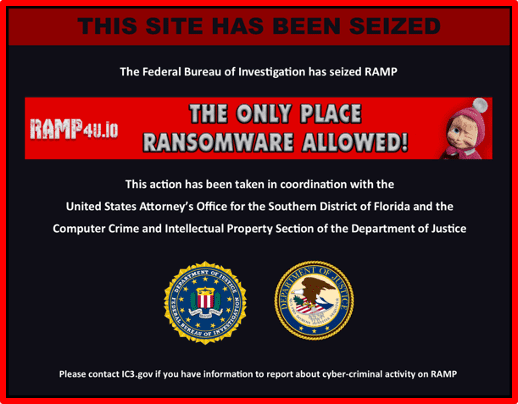
The January 28 law enforcement seizure of RAMP (Russian Anonymous Marketplace) marks another inflection point in the ransomware ecosystem.

According to security researchers, RAMP was created in 2012 but “rose to prominence” in 2021 and was reportedly operated by members of the Babuk ransomware group. RAMP functioned as a Russian-language darknet forum positioned as a curated space for ransomware operators and affiliates.

Research from Yelisey Bohuslavskiy suggested RAMP may have been created by individuals with ties to Russian security services, partly as a countermeasure to the rapid expansion of Ransomware-as-a-Service (RaaS). Prior to 2020, Russian, Belarusian, and Ukrainian security agencies reportedly had substantial visibility into highly organized groups such as Ryuk, Conti, REvil, and Maze. In that context, RAMP may have functioned, in part, as an environment that allowed continued observation of the ransomware landscape as it evolved.

In a LinkedIn post, Bohuslavskiy offered a nuanced assessment of the forum’s seizure:

  • Impact on lower-tier actors: RAMP’s closure disproportionately affects smaller operators who relied on the forum for distribution, recruitment, and visibility.
  • Distribution disruption: Underground sellers lose a structured marketplace, though platforms like Telegram may absorb some of that displacement.
  • Limited impact on top-tier groups: More sophisticated ransomware groups largely avoided RAMP, wary of its associations and potential exposure.
  • Reduced visibility for Russian security services: If RAMP did function as a monitoring node, its disappearance may reduce insight into ransomware activity.

Daniel Wilcock, a threat intelligence analyst at Talion, also noted that while the RAMP operator claims to have no plans to create a new forum, actors will likely migrate to alternative darknet forums. As a result, the broader impact on the cybercrime ecosystem may be limited. In the short term, fragmentation is likely. Lower-level actors lose access to established reputation systems and launch channels. Larger entities, however, have historically demonstrated strategic resilience and operational adaptability.

The broader takeaway remains consistent: infrastructure disruptions rarely eliminate ransomware ecosystems; they redistribute them.

From a collection standpoint, this reinforces how quickly reputation and activity shift across forums when a central node disappears. We see similar dynamics in other threat environments. When a TOR-based extremist site is seized or a Telegram channel is banned, communities rarely dissolve; they fragment, migrate, and reconstitute elsewhere. The same adaptive behavior applies to cybercriminal ecosystems.

Lower-tier actors will likely continue interacting across a mix of darknet forums and messaging platforms, including Telegram.

Forums to Monitor Post-RAMP

With RAMP offline, attention is shifting toward other established and emerging hubs:

  • Exploit – A longstanding Russian-language forum with structured reputation systems and consistent exploit sales, initial access offerings, and broker activity.
  • DarkForums – An English-language platform blending data leaks, credential sales, cracking services, and mid-tier cybercriminal collaboration.
  • XSS – Historically one of the most influential Russian cybercrime forums. Despite recurring honeypot rumors, it remains active and operational.
  • BreachForums (clones and successors) – High churn, rapid rebranding cycles, and volatile trust environments that often attract opportunistic actors following major disruptions.
  • ReHub – A smaller but growing Russian-language forum that has seen increased visibility following recent enforcement actions, frequently hosting access sales and service advertisements.
  • LeakBase – Primarily focused on breached data distribution, credential leaks, and database sales, functioning more as a leak-centric marketplace than a full-service criminal forum.
  • XForums – A mid-tier forum combining exploit discussions, account sales, and service advertisements, attracting actors displaced from larger platforms.
  • HydraForums – Not directly affiliated with the original Hydra marketplace but leveraging brand recognition; hosts cybercrime services, data leaks, and marketplace-style listings.

Rather than a single dominant ransomware forum emerging immediately, we may be entering a prolonged phase of decentralization: parallel ecosystems, shorter trust cycles, and increased cross-platform migration. The BreachForums seizure produced a similar dynamic. These actors do not stop operating – they evolve, reorganize, and migrate. For threat intelligence teams and researchers, this reinforces the need to expand monitoring horizontally and strengthen cross-forum actor correlation.


Stay up to date with the latest in the dark web space. Follow us on LinkedIn.

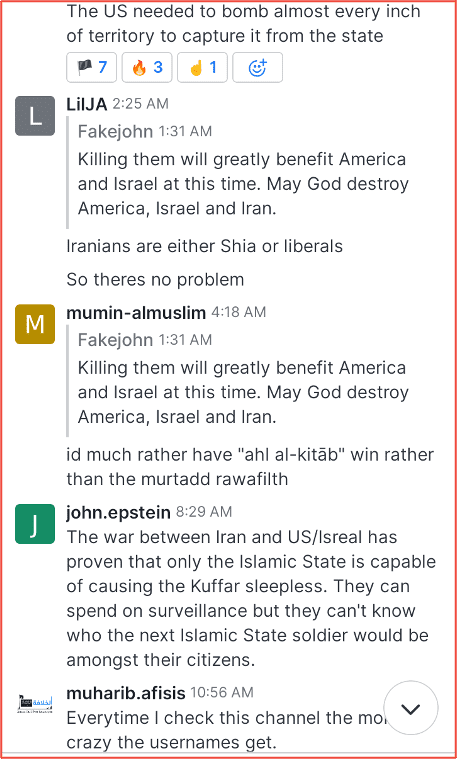
Dark Web Reactions to the Israel–Iran Conflict

March 09, 2026

On 28 February 2026, the United States and Israel launched airstrikes against Iran targeting key military commanders, nuclear facilities, and government infrastructure. The attacks reportedly resulted in the death of Supreme Leader Ali Khamenei, along with several senior officials. Iran immediately retaliated using drones and missiles against U.S. bases in the region as well as targets in Israel. Missile strikes were also reported in Saudi Arabia, the UAE, and Qatar. The conflict continues to escalate, with the U.S. government reportedly pursuing regime change while Iran seeks to demonstrate regional military capability.

As these real-world events unfold, communities on the dark web and adjacent platforms have also reacted to the conflict. Some groups have participated in cyberattacks, others have provided commentary, and many have used messaging platforms such as Telegram to share real-time updates. This blog explores reactions observed across these ecosystems.

Hacktivist groups are online collectives or loosely organized networks that use hacking or disruptive digital tactics to promote a political, social, or ideological cause. These groups have become increasingly visible on platforms such as X (Twitter) and Telegram, where they seek notoriety for their activities, particularly during major geopolitical events such as the conflict in Ukraine and the October 7 attacks in Israel. The strikes against Iran have similarly prompted increased hacktivist activity.

Common attack types associated with hacktivist groups include:

Distributed Denial of Service (DDoS) attacks: overwhelming a website or online service with large volumes of traffic, rendering it slow or unavailable to legitimate users.

Website defacement: compromising a website and replacing its content with propaganda, slogans, threats, or political messaging.

Data leaks: hackers steal and publish emails, documents, or internal files to embarrass or expose targeted organizations.

Although other types of cyber activity may occur, these represent the primary tactics observed among the hacktivist groups tracked by DarkOwl.

There has been a noticeable increase in hacktivist activity following the airstrikes on Iran, with many groups taking sides and targeting organizations or countries they perceive to be involved in the conflict. Several groups that previously supported pro-Palestinian causes have also opposed the strikes on Iran due to their broader opposition to Israel.

According to a recent report from Radware, 110 organizations were targeted across 149 hacktivist-driven DDoS attacks in the immediate aftermath of the U.S.-Israel campaign against Iran. Of these incidents, 107 were targeted entities in the Middle East, primarily focusing on public infrastructure and government institutions.

The Tunisian hacktivist group Hider Nex posted on 28 February, after a 10-day hiatus, claiming to have launched an attack against an Israeli telecommunications company in response to the strikes on Iran. The activity appeared to involve a DDoS attack. In their messaging, the group stated they “support Iran in the war against the enemies of Islam.”

The group has continued to target organizations in Israel. However, while conducting these attacks, they have also attempted to sell DDoS services and alleged Israeli data leaks, suggesting their motivations may be partly financial rather than purely ideological.

Another hacktivist group, Nation of Saviors, changed its Telegram profile image to depict the deceased Iranian Supreme Leader.

A Russian-affiliated hacktivist group known as Babayo Eror System began posting on 1 March, claiming attacks against U.S. and Israeli websites.

The group has also reposted content from Keymous+, a pro-Russian collective that has issued threats against Gulf states, arguing that these countries stand to benefit from U.S. and Israeli strikes on Iran. The group has framed these activities under the hashtag #Op_Epstein_Gulf, an apparent reference to disgraced financier Jeffrey Epstein.

While most hacktivist groups observed have focused primarily on DDoS attacks and website defacement, some are expanding their messaging to include references to potential targets and reported casualties. Additional information related to this activity is discussed later in this blog.

Many of these groups are also sharing videos and images related to the conflict, as well as commentary from politicians and public figures. While some of this content appears to be AI-generated, other material appears legitimate; however, the authenticity of these images and videos has not been independently verified. Some media also appears to be forwarded directly from news sources.

The mixture of authentic media, reposted news footage, and AI-generated imagery reflects a broader pattern of information amplification and narrative shaping commonly observed in hacktivist online ecosystems.

The group Z-BL4CX-H4T shared a video appearing to show a hanger filled with drones and followed this with posts listing countries they claimed Iran had successfully attacked.

The group also claimed that North Korea was supporting Iran in attacks against US and Israel affiliated sites.

As with previous conflicts, Telegram has become a major source of real-time information sharing. Numerous posts on the platform have circulated footage of missile strikes, images of military equipment, and updates from official organizations.

The Telegram channel ايران بالعربي (Iran in Arabic), which supports the Iranian government, shared images, and video footage of protests allegedly criticizing U.S. imperialism. The post claimed the protest took place in Stockholm, although DarkOwl has not verified the authenticity of these images.

The channel also shared images that appear to show people celebrating in the streets of Tehran.

As during the October 7 attacks, the IDF Telegram channel has been used to share official updates and warnings with Israeli citizens, including guidance on whether residents should take shelter.

News agencies have also circulated urgent warnings, identifying areas being targeted.

Additional videos circulating on Telegram appear to show damage from airstrikes in civilian areas. These images have not been independently verified by DarkOwl.

Other imagery shared on Telegram attempts to link the conflict in Iran with the ongoing war in Gaza.

Several groups associated with white supremacist ideology have also commented on the conflict.

One group stated that while they oppose Israel due to antisemitic beliefs, they also do not support Iran due to its Muslim identity, reflecting their ideological vision of a white, Christian ethno-state.

However, another Telegram channel shared an AI-generated image supporting Iran, which included both the Iranian flag and the Sonnenrad symbol, commonly associated with neo-Nazi and Atomwaffen-affiliated extremist groups.

This example highlights a broader trend in which ideological boundaries are increasingly blurred, particularly among groups linked to Nihilistic Violent Extremism (NVE).

DarkOwl monitors a range of Telegram and Rocket.Chat channels used by jihadist groups and their supporters, including communities linked to ISIS and al-Qaeda. Early reactions to the Israel–Iran conflict have emerged across these platforms.

A statement attributed to a group calling itself the Cyber Jihad Movement was identified on March 4, 2026, by counterterrorism researchers. The English-language document presents the group as an “IT organization linked to al-Qaeda” and calls on supporters to participate in what it describes as a “global cyber jihad.”

The statement encourages technically skilled supporters to conduct cyber operations targeting the governments and institutions of the United States, Israel, Pakistan, India, and several Arab countries, including cyberattacks designed to disrupt financial systems and government infrastructure.

The document also announces the group’s “entry” into the Iran–United States conflict and the Afghanistan–Pakistan conflict, expressing support for the Pakistani Taliban (TTP) and the Islamic Emirate of Afghanistan (Taliban).

While there is currently no public evidence of operational capability associated with the Cyber Jihad Movement, the messaging reflects ongoing attempts by jihadist-aligned actors to frame cyber activity as a legitimate extension of militant struggle.

Supporters of the Islamic State also discussed the conflict on an unofficial Rocket.Chat server historically used by IS sympathizers.

Users shared reactions to early reports of the conflict, often expressing hostility toward Iran and Shia Muslims.

Some users suggested that prolonged military pressure on Iran could create opportunities for expansion by Islamic State Khorasan Province (ISKP).

Some participants framed the conflict as validation of Islamic State narratives about its ability to challenge global powers.

Discussion on the server also revealed growing paranoia about infiltration by researchers and law enforcement, particularly following arrests linked to previous administrators of the community.

These conversations illustrate how jihadist communities interpret geopolitical events through ideological narratives while simultaneously dealing with internal distrust and operational pressure.

Iranian-aligned militia groups across Iraq and the broader “Axis of Resistance” ecosystem have also used Telegram channels to shape narratives surrounding the conflict, combining operational claims, ideological messaging, and propaganda directed at regional and Western audiences.

The group وحدة الصفوة (Safwa Unit), which claims affiliation with Kata’ib Hezbollah, has circulated graphics identifying alleged Israeli targets, including Israeli officials and public figures.

The channel has also shared imagery commemorating individuals it describes as Hezbollah “martyrs.”

Such messaging blends propaganda and intimidation and reflects a broader pattern of militant-aligned channels using visual propaganda to signal potential targets while reinforcing narratives of resistance.

Another Telegram channel monitored by DarkOwl is أصحاب الكهف (Ashab al-Kahf), affiliated with Iraqi Popular Mobilization Forces (PMF) factions including Kata’ib Sarkhat al-Quds (كتائب صرخة القدس).

Recent posts on the channel have focused on the conflict and tensions involving U.S. forces.

One statement claimed responsibility for targeting a U.S. military base in Kuwait using drones, warning that operations would escalate.

Other posts emphasized ideological alignment with Iranian Supreme Leader Ali Khamenei, framing the conflict as part of a broader struggle against Western influence.

The channel also shared stylized propaganda imagery depicting Khamenei in militant imagery.

Taken together, this content illustrates how Iranian-aligned militia channels blend operational claims, ideological messaging, and propaganda to frame regional conflict narratives.

Communities across the dark web and adjacent platforms are actively reacting to the escalating conflict between Iran, Israel, and the United States. These reactions vary widely depending on the ideological orientation of each community.

Hacktivist groups have attempted cyberattacks against perceived adversaries; news channels have used Telegram to disseminate real-time updates, and extremist communities have leveraged the conflict to amplify propaganda narratives.

As the conflict continues to evolve, online discourse within these ecosystems will shift alongside real-world developments. DarkOwl will continue monitoring these platforms for emerging threats, cyber activity, and extremist messaging related to the conflict.


Ransomware Affiliate Programs: Anatomy of a Criminal SaaS

March 5, 2026

Ransomware isn’t just malware, it is an operating model. Increasingly, ransomware groups as well as extorting victims themselves, have also operated “affiliate programs,” often called Ransomware-as-a-Service (RaaS). In this arrangement, a core team provides the tooling and brand, while affiliates conduct intrusions and share the proceeds with the owners of the malware.

This blog breaks down how the affiliate model works, why it persists, and which ransomware “brands” researchers most often associated with affiliate-driven operations in 2025.

A ransomware affiliate program is a partnership structure between a core operator group – usually developers and infrastructure maintainers – and affiliates which usually consist of intrusion teams who deploy ransomware and run extortion negotiations with the victim, with revenue typically split between them. Think of it as a criminal version of a platform business: the “platform” team builds and maintains the product (ransomware + infrastructure), while “partners” scale distribution (intrusions) in exchange for a share of profits.

The core group are usually responsible for maintaining the ransomware codebase and continually updating it to evade defenses; they will also host negotiation portals, victim dashboards, and leak sites where victim data is shared on the dark web.

They will also provide “support” to affiliates by providing troubleshooting services, process guidance and other things to ensure that the affiliates are successful.

Affiliate programs usually have a strict set of rules on how the ransomware can be used. The core group sets these rules and enforces program rules; these usually cover who can target what, what tactics are allowed, and dispute handling.

The Affiliate groups are usually responsible for choosing targets and executing intrusions using the malware they are supplied by the core groups. They will also perform data theft and later-stage deployment steps, run negotiations, which can sometimes have operator oversight or supplied templates. They will also coordinate payment verification and handoff of decryption. However, this can vary by program with different groups having different practices and different revenue shares.

Although the core group and the affiliates are the main practitioners, other threat actors can also be involved in this ecosystem such as Initial Access Brokers (IABs) who sell access to compromised environments which the ransomware group or affiliates will then use to target victims. There can also be specialist roles for credential theft, phishing, negotiation, laundering, etc.

This separation makes attribution harder for researchers and explains why the same intrusion patterns can “carry over” even when a ransomware “brand” changes.

Most established RaaS operations provide a bundle that looks like a grim SaaS product, this can include Affiliate panels / dashboards to manage victims, builds, and negotiations, a standardized extortion workflow which can include victim instructions, negotiation playbooks, as well as product support. They will also be provided with access to leak site infrastructure, hosted on the dark web, to publish victim data and increase pressure. As well as being provided with all the tools, being an affiliate is an attractive prospect as it also provides brand credibility. A known “name” can increase perceived threat and victim payment rates. Not all ransomware groups are the same, and some have the reputation for being successful and or being able to target high profile victims.

While the entry method differs by actor, many affiliate-run incidents follow a familiar lifecycle:

  1. Initial Access: The threat actor will obtain access to the victim’s infrastructure commonly via stolen credentials, exposed services, or purchased access, from an initial access broker. Increasingly data leaked after a ransomware attack can be used to target a supply chain.
  2. Data Theft: While traditionally ransomware encrypted data so the victim could not access it, that is not usually the case anymore with most actors simply exfiltrating as much data as they can from the victim. This data will then be used to extort the victim in the hope that the “ransom” will be paid to avoid the financial and reputational damage of having data shared on the dark web.
  3. Encryption & Ransom: Some actors do still use an encryption method as part of their tactics, and in all cases will issue a ransom note which will provide details of their demands – usually payment in cryptocurrency. Many groups position themselves in these notes as researchers who are helping the victim avoid damage. Whether encryption occurs is sometimes secondary, the “business” is often extortion, not encryption.
  4. Negotiation: Usually through the ransom note the victim is provided with a timeline in which to pay the ransom to avoid having their data released; this can also appear as a countdown on the darkweb leak site. The actors will often provide a portal for the victim to contact the threat actor, often on the dark web where negotiation can happen. As most victims do not disclose if they have paid the ransom or not, we do not have a clear picture of how these negotiations play out.
  5. Payment or Leak: If the victim chooses to pay the ransom, they will be provided with a cryptocurrency address in which to make the payment to. They will be provided with a decryptor, if the data was actually encrypted and the victim’s name will be removed from the leak site. However, the fact that the victim appeared on the page and then removed can suggest payment was made and can still cause reputational damage.

Many 2025 “top group” lists rely on data-leak site postings as a proxy for activity, but it undercounts failed extortions, private settlements, and unposted victims. Furthermore, as the data has been exfiltrated, there is no guarantee that making the payment means the data will not be released at some point. If the payment is not made, the data will be made available for download on the leak site.

Affiliate programs need incentives and mechanisms to manage distrust and also to attract “good” actors to run operations. The programs usually work on the basis of revenue splits, where the affiliate keeps the larger portion, and operators take a platform fee.

Affiliates will often choose a ransomware brand that has not only had public success but also that are perceived as reliable payers. They may work with multiple groups. RaaS operators compete for affiliates with better splits, better support, more stable infrastructure, and broader “brand” recognition.

However, the core group can also be picky about who they work with, some groups are reported to only work with affiliates from certain countries and will set up their systems in a way to avoid exit scams, where operators steal all of the proceeds and do not pay the platform fee.

Takedowns, leaks, and internal conflicts lead can lead to splits, rebrands, and “new” groups that may be continuity operations rather than truly new actors. When a brand is disrupted, affiliates don’t disappear; they migrate, bringing tradecraft and victim targeting patterns with them.

Below are ransomware “brands” reported to be operating in an affiliate-friendly or RaaS-like manner. This is not exhaustive, and “brand” ≠ a single consistent team.

All of these groups are tracked by DarkOwl, with their leak sites being closely monitored for new victims.

Ransomware affiliate programs persist because they’re efficient; they turn a complex criminal operation into a repeatable platform. In 2025, the most important researcher takeaway isn’t just which brand is “on top,” but how affiliates move, how brands compete for them, and how extortion infrastructure evolves across disruptions.


Learn how DarkOwl tracks these groups and more. Contact us.

7 Early Warning Signals before a Cyberattack: Know what to look for and how to counter them

February 26, 2026

Cyberattacks rarely occur on impact. There are often early warning signals.

Long before ransomware detonates, credentials are stolen and sold, meaning data is quietly being exfiltrated from the system. Meaning there are indicators. Slight behavior shifts. Fragments of telemetry that, viewed individually, look harmless. Viewed as a collective, they tell a story.

Most organizations do not fall victim because they lack tools. They become victims because they lose or dismiss early warning signals as noise.

If you want to interrupt an attack before it becomes an incident, you have to know what to look for and you have to treat weak signals seriously.

Identity is the primary control plane in modern environments. According to the 2024 Verizon Data Breach Investigations Report, the majority of breaches continue to involve the human element, including stolen credentials and social engineering.

Early warning signs often appear in authentication telemetry before anything else.

Look for:

  • Repeated failed logins followed by a successful login from the same account
  • Logins from atypical geographies or impossible travel scenarios
  • Dormant accounts suddenly becoming active
  • Privilege escalation requests that do not align with job functions

These are not necessarily breaches. But they are often precursors.

Adversaries frequently test credentials quietly before operationalizing access. The MITRE ATT&CK framework documents techniques such as credential stuffing, password spraying, and valid account abuse under Initial Access and Persistence tactics.

If identity behavior shifts, assume it is meaningful until proven otherwise.

Multifactor authentication is not invincible. Attackers increasingly exploit user behavior instead of cryptographic weaknesses.

Push bombing, also known as MFA (multifactor authentication) fatigue, floods a user with repeated authentication prompts until they approve one out of frustration or confusion. The Cybersecurity and Infrastructure Security Agency has published guidance highlighting this growing tactic.

Early warning indicators include:

  • Multiple MFA prompts within short time periods
  • Authentication approvals outside normal working hours
  • Users reporting repeated push requests they did not initiate

When a user comments, “I keep getting login prompts even though I’m not trying to sign in” that’s not a help desk or internal IT nuisance. It’s an intrusion attempt in progress.

Privilege creep happens naturally over time. Attack driven privilege escalation looks different.

Take notice when you see:

  • Service accounts added to privileged groups without change control documentation
  • Administrative roles assigned temporarily and never revoked
  • API keys created outside normal deployment pipelines

The 2023 IBM Cost of a Data Breach Report noted that organizations with mature identify and access management practices experienced significantly lower breach costs compared to those without.

Access to expansion without operational justification is rarely accidental. It is often reconnaissance or staging.

Before large scale data exfiltration occurs, the threat actors have already mapped out the environment. They enumerate systems, prob for open ports, and test lateral movements before escalations.

Signals to look for:

  • Internal port scanning from a user workstation
  • Lateral traffic patterns that do not match baseline behaviors
  • DNS queries to newly registered or suspicious domains

According to the 2024 CrowdStrike Global Threat Report, adversaries continue to reduce breakout times, meaning the time between initial access and lateral movement can be quite short.

If your only alerts are on large data transfers, you may be waiting to react until it’s already at the end of the story. Early detection means paying attention to reconnaissance.

Attackers frequently attempt to disable security tooling before executing payloads.

Warning signals include:

  • Endpoint detection agents being stopped or uninstalled
  • Logging services disabled or modified
  • Registry or system configuration changes affecting security posture

Again, the MITRE ATT&CK technique Impair Defenses specifically outlines how adversaries disable or modify security tools to evade detection.

If telemetry goes dark unexpectedly, treat that as an alert, not as an inconvenience.

Not all early signals originate inside your environment.

Compromised credentials, exposed API keys, and proprietary data often appear on underground forums and marketplaces before being weaponized at scale. Proactive darknet monitoring can identify leaked corporate emails, password dumps, and access listings tied to your organization.

Routinely monitoring for credential exposure and enforcing password resets and token revocation when compromise is suspected.

External signals can provide a critical time advantage.

Security telemetry is critical. So is human intuition.

Sometimes employees notice:

  • Suspicious emails that somehow bypassed filters
  • Files appearing in a shared drive that no one claims ownership of
  • Systems behaving slower or differently than usual

Encouraging reporting without penalty. The 2024 Verizon DBIR emphasizes that human reporting remains a key detection source for many incidents.

If your culture discourages raising small concerns, you will only hear about problems when it is too late.

Attackers operate in stages. Initial access. Persistence. Privilege escalation. Lateral movement. Exfiltration. Impact.

Each and every stage generates signals.

Organizations that wait for definitive proof of compromise are often responding during the Impact phase. At that point, containment becomes expensive and public.

Early warning detection shifts the timeline left.

It creates opportunities to:

  • Reset credentials before privilege escalation
  • Isolate endpoints before ransomware deployment
  • Revoke tokens before data exfiltration

The financial implications are significant. IBM reports that organizations that identified and contained breaches under 200 days save substantially compared to those with longer dwell times.

Speed matters. However, speed cannot increase without signal recognition.

Recognizing early indicators is not about being paranoid. It is about pattern awareness and pattern detection.

Practical steps include:

  • Baseline normal behaviors across identity, network, and endpoint telemetry
  • Correlate weak signals across multiple control layers
  • Treat identity anomalies as high priority events
  • Integrate darknet monitoring into threat intelligence workflows
  • Encourage user reporting and close the feedback loop.

You will never be able to eliminate all risks. The goal is to reduce attackers’ dwell time.

Cyberattacks rarely occur unannounced. The warnings are just whispers, not shouts.

Organizations need to learn to listen to those whispers and how to act before they become a crisis.


Ethical Dilemmas in Dark Web Research

February 24, 2026

Dark web research remains a difficult domain. It is essential for uncovering illicit activity, yet fraught with ethical, operational, and legal complications. Unlike traditional threat intelligence work, dark web investigations often require some level of immersion in communities built on illicit activity and therefore requires its own set of rules and practices.

While DarkOwl Vision allows researchers to safely search and monitor the dark web without embarking on these complications, it is important to understand what the ethical and legal best practices are and what guidelines need to be followed and are followed by DarkOwl analysts.

This blog explores the key ethical and legal tensions, maps them against the DOJ’s (Department of Justice) guidance, and offers practical considerations for responsible dark web research.

In February 2020, the DOJ’s Cybersecurity Unit released a guidance document titled Legal Considerations when Gathering Online Cyber Threat Intelligence and Purchasing Data from Illicit Sources.

This is the guidance in the US for which dark web research and interactions should comply with. The guidance is aimed at companies and security firms who engage in online threat intelligence gathering; this includes monitoring dark web forums, marketplaces, or purchasing data, malware, or exploit information offered in “dark markets.” The goal of the guidance is to help analysts assess their potential exposure under federal criminal law when participating in certain activities or the purpose of their research. It particularly focuses on accessing, purchasing, or using illicitly obtained data.

However, the document is not legally binding, and it does not create rights or immunity from prosecution. And it does not address all use cases and activities. For example, it explicitly does not purport to deal with every scenario (e.g., child-pornography forums or illicit drug markets may involve additional legal issues).

The guidance recommends private actors who do more than “passive monitoring” (e.g., active communication, purchasing) to:

  1. create a written operational plan or “rules of engagement”
  2. keep records of how data is collected and used
  3. work with legal counsel before engaging in risky activities

Let’s explore some of the specific activities the guidance covers and what best practices should be.

According to the DOJ, passive monitoring of publicly accessible dark web forums or marketplaces (reading, collecting posts, observing patterns) “poses little risk of federal criminal liability,” provided the researcher does not exploit vulnerabilities or misuse credentials.

Best practice: still maintain documentation — e.g., record what tools you used (crawler, VPN, etc.), what forums you monitored, timestamps, and your research purpose. DarkOwl Vision does this for you, so you don’t have to.

Per DOJ guidance, active communication, use of unauthorized credentials (stolen credentials), or purchase of stolen data or malware can trigger liability under federal statutes. Therefore, any of these actions need to be undertaken with extreme caution and legal advice. While researchers can create fake personas, or sock puppets, they cannot use third-party or stolen credentials to access sites. Creating sock puppets does not guarantee immunity and should be done in compliance with company policy and with documentation of what was created and for what.

Purchasing data is a very risky area; it is a must that you have proper legal authorization in place before purchasing any data. This should only be done in a “defensive” way, buying back your own data, for example. However, you must make sure that you evidence that there is no criminal intent and document the reason for purchasing the data. Legal review is essential, as well as clear and thorough documentation.

This is not just a legal matter, however. Ethically we want to ensure that we are not supporting the criminal ecosystem by providing funds to threat actors that could be used for further attacks in the future. This is why DarkOwl never buys data.

If analysts need to interact directly on the dark web, the following practices are recommended:

  • Passive monitoring only (no purchases, no unauthorized credentials)
  • Maintain written operational plan and rules of engagement
  • Keep full logs and records of activity (what, when, why)
  • Seek legal counsel before any active engagement (purchase, communication, exploit use)
  • Minimize or avoid storing sensitive/stolen data; prefer metadata or anonymized indicators
  • If publishing, treat attribution as probabilistic; avoid definitive claims without strong evidence
  • Avoid methodologies that exploit vulnerabilities or unauthorized access to private systems/services

With the release of DOJ’s 2020 guidance, dark web research is no longer a completely lawless frontier for private researchers — but neither is it risk-free or ethically trivial. The guidance provides a valuable baseline for lawful behavior, but it should be treated as a floor, not a ceiling. Ethical, responsible research demands transparent documentation, strict adherence to “least-impact” principles (passive monitoring, data minimization), and legal review before engaging in higher-risk activities.


DarkOwl is the leader in darknet data. Contact us to learn how we can help with your research and monitoring.

Copyright © 2026 DarkOwl, LLC All rights reserved.
Privacy Policy
DarkOwl is a Denver-based company that provides the world’s largest index of darknet content and the tools to efficiently find leaked or otherwise compromised sensitive data. We shorten the timeframe to detection of compromised data on the darknet, empowering organizations to swiftly detect security gaps and mitigate damage prior to misuse of their data.